2015 · GS Paper 4 · Q1(b)(ii) · 2 marks
Differentiate between the following: Ethical management and Management of ethics
In short
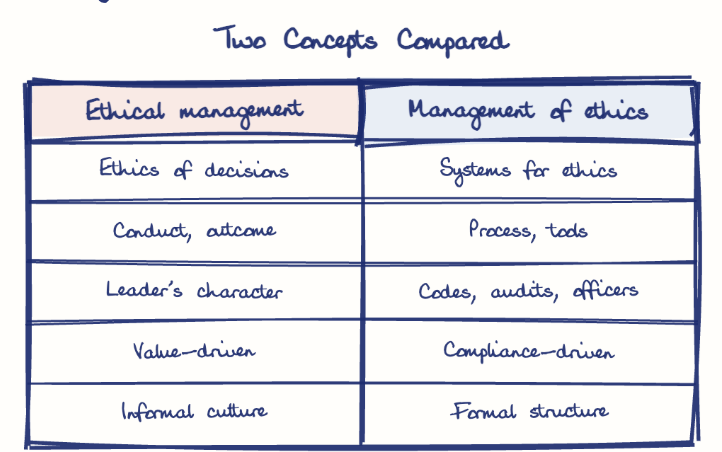
Ethical management means running an organisation ethically in its actual decisions, while management of ethics means the codes, audits and vigil mechanisms that institutionalise ethics. Enron's collapse in 2001 despite a detailed code of ethics shows that structure without ethical conduct fails.
Model answer
Ghissu Editorial · Verified 4 Oct 2026 · 292 words
Ethical management
It means managerial decisions that meet ethical expectations beyond profit and law, as when Taj hotel staff put guests' lives first during the 26/11 attacks (2008).
Management of ethics
It means the structures that institutionalise ethics, such as codes, ethics officers, training, audits and the vigil mechanism required under Section 177 of the Companies Act 2013.
Substance versus structure
Ethical management is what the organisation actually does; management of ethics is the machinery meant to make it behave well.
Form without substance
Enron had a detailed code of ethics yet collapsed through fraud in 2001, a case of the Procedural Compliance Fallacy, rules followed in form without ethical intent.
Substance without structure
Integrity resting on one leader fades when the leader leaves, so the Central Vigilance Commission's preventive vigilance and the Whistle Blowers Protection Act 2014 try to institutionalise it.
Means and end
Management of ethics is the means and ethical management the end; codes work only when leaders model them.
This model answer is indicative and the model can make mistakes; please verify key facts independently.
Practise this question
1Get the answer sheet
Sized for this question.
2Write your answer
Timed, by hand.
3Get it marked
Your score and what to fix.
This chapter in the exam
Dimensions of ethics13 questions
Asked in 8 of 14 sittings since 2013
- 2026Citing the serious adverse effects of long-term medication, a doctor convinces the family of a female patient for surgery. This led the patient to reluctantly consent for the surgery, though her original choice was to opt for medication. Explain the concepts of paternalism and beneficence by analysing the doctor's action.
- 2026Some moral philosophers argue that spending some of your resources—without significantly affecting your financial stability—to help other people who badly suffer is our moral duty and not merely a matter of charity. Justify this claim by explaining the distinction between duty and charity.
All 13 questions, sorted by sub-topic, with model answers and practice.
Question from the official UPSC Civil Services (Main) Examination 2015 paper. Answer written by Ghissu's engine and checked against our editorial standards. Found an error? Tell us and we correct it within 48 hours.