2016 · GS Paper 1 · Q12 · 12 marks
What is the basis of regionalism? Is it that unequal distribution of benefits of development on regional basis eventually promotes regionalism? Substantiate your answer.
In short
Regionalism rests on language, ethnicity, history and political mobilisation, and unequal distribution of development benefits does eventually promote it where deprivation meets a distinct identity. Telangana's 2014 separation over water, funds and jobs, despite a shared Telugu language, is the clearest proof.
Model answer
Ghissu Editorial · Verified 4 Oct 2026 · 277 words
Language and culture
The linguistic reorganisation of 1956 and the Dravidian movement show language as the first marker of regional identity.
Ethnicity and history
Tribal identities drove the Naga and Mizo movements, and the memory of Nizam rule set Telangana apart.
Political mobilisation
Parties such as the DMK and Shiv Sena turned identity into a vote base, as Paul Brass's elite theory predicts.
Neglect breeds statehood
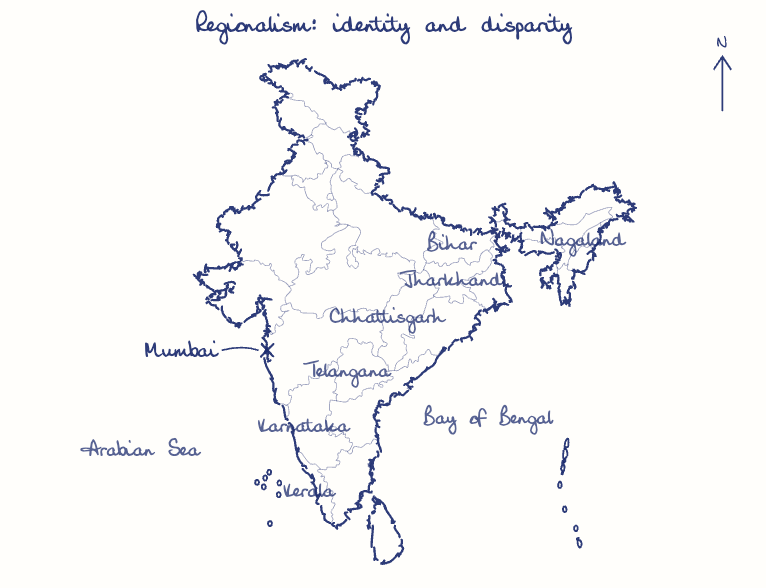
Telangana's 2014 separation followed decades of grievance over the Gentlemen's Agreement of 1956 and the slogan of water, funds and jobs, though Telugu was shared on both sides.
Resource-rich, people-poor
Mineral-rich Jharkhand and Chhattisgarh, formed in 2000, saw their coal and iron flow out while tribal districts stayed poor.
Prosperity also asserts
Karnataka's February 2024 protest against its share of tax devolution shows richer states turning regionalist when shortchanged.
Culture without deprivation
Tamil linguistic assertion thrived in a relatively developed state.
This model answer is indicative and the model can make mistakes; please verify key facts independently.
Practise this question
1Get the answer sheet
Sized for this question.
2Write your answer
Timed, by hand.
3Get it marked
Your score and what to fix.
This chapter in the exam
Regionalism4 questions
Asked in 4 of 14 sittings since 2013
- 2024What is regional disparity? How does it differ from diversity? How serious is the issue of regional disparity in India?
- 2020Do you agree that regionalism in India appears to be a consequence of rising cultural assertiveness ? Argue.
All 4 questions, sorted by sub-topic, with model answers and practice.
Question from the official UPSC Civil Services (Main) Examination 2016 paper. Answer written by Ghissu's engine and checked against our editorial standards. Found an error? Tell us and we correct it within 48 hours.