2016 · GS Paper 4 · Q7(a) · 5 marks
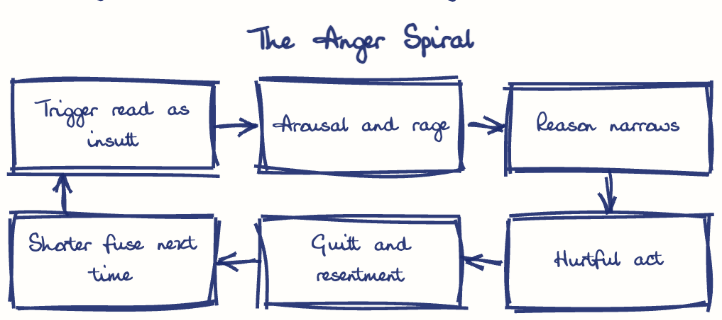
Anger is a harmful negative emotion. It is injurious to both personal life and work life. Discuss how it leads to negative emotions and undesirable behaviours.
In short
Unregulated anger breeds resentment, hatred, guilt, anxiety and envy, and drives aggression, rash decisions, broken relationships and abuse of authority at home and work. The Gita (2.62-63) traces this chain from anger to delusion to the ruin of reason.
Model answer
Ghissu Editorial · Verified 4 Oct 2026 · 280 words
Resentment into hatred
Nursed anger hardens into a grudge; Duryodhana's humiliation at Indraprastha festered into a hatred that ended only at Kurukshetra.
Guilt and shame
Remorse after an outburst lowers self-worth and makes the next provocation harder to bear.
Anxiety and envy
Chronic anger keeps stress hormones high, breeds restlessness, and reads others' success as a personal slight.
Aggression
In an Emotional Hijack, impulse overrides reason; Zidane's head-butt in the 2006 World Cup final got him sent off in his last match.
Rash decisions
Anger narrows attention, so a manager punishes a whole team for one lapse or an officer passes a hasty order that cannot survive review.
Broken relationships
Shouting and sarcasm erode trust in families and teams, and capable colleagues withdraw.
Abuse of authority
A Self-Regulation Deficit makes an official rude to citizens, against the courtesy the All India Services (Conduct) Rules require.
This model answer is indicative and the model can make mistakes; please verify key facts independently.
Practise this question
1Get the answer sheet
Sized for this question.
2Write your answer
Timed, by hand.
3Get it marked
Your score and what to fix.
This chapter in the exam
Emotional intelligence — Concepts7 questions
Asked in 5 of 14 sittings since 2013
- 2023"What really matters for success, character, happiness and lifelong achievements is a definite set of emotional skills — your EQ — not just purely cognitive abilities that are measured by conventional IQ tests." Do you agree with this view? Give reasons in support of your answer.
- 2020'Hatred is destructive of a person's wisdom and conscience that can poison a nation's spirit.' Do you agree with this view? Justify your answer.
All 7 questions, sorted by sub-topic, with model answers and practice.
Question from the official UPSC Civil Services (Main) Examination 2016 paper. Answer written by Ghissu's engine and checked against our editorial standards. Found an error? Tell us and we correct it within 48 hours.