2020 · GS Paper 4 · Q2(a) · 10 marks
'Hatred is destructive of a person's wisdom and conscience that can poison a nation's spirit.' Do you agree with this view? Justify your answer.
In short
Hatred does destroy wisdom and conscience by clouding judgement and dehumanising others, and once collective it poisons a nation through prejudice, mob violence and broken fraternity. Hate broadcasts in Rwanda primed the 1994 genocide that killed about 800,000 people.
Model answer
Ghissu Editorial · Verified 4 Oct 2026 · 277 words
Clouded judgement
The Gita (2.62-63) traces the slide from anger to delusion (*sammoha*) to the ruin of reason (*buddhi-nasha*).
Silenced conscience
Hatred dehumanises its target; Nazi propaganda that cast Jews as vermin turned ordinary Germans into bystanders or accomplices of the Holocaust.
Self-destruction
Duryodhana's hatred made him refuse Krishna's plea for five villages, destroying his own clan.
Partial administration
An officer who hates a group suffers an Objectivity Deficit and cannot give equal protection under Article 14.
Words become violence
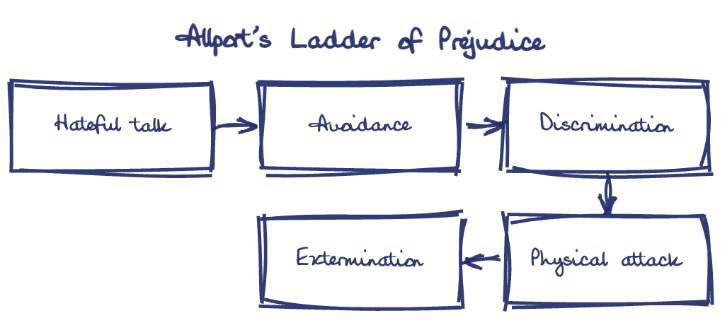
Allport (1954) showed hateful talk escalating step by step; in Rwanda in 1994, broadcasts on Radio Mille Collines primed a genocide that killed about 800,000 people.
Fractured fraternity
Partition's communal hatred in 1947 killed hundreds of thousands and uprooted about 15 million people.
Mobocracy
The Supreme Court in *Tehseen Poonawalla* (2018) condemned lynching as "horrendous acts of mobocracy".
Qualification
Indignation at injustice differs from hatred of persons, as Gandhi's "hate the sin, not the sinner" and Mandela's choice of reconciliation show.
This model answer is indicative and the model can make mistakes; please verify key facts independently.
Practise this question
1Get the answer sheet
Sized for this question.
2Write your answer
Timed, by hand.
3Get it marked
Your score and what to fix.
This chapter in the exam
Emotional intelligence — Concepts7 questions
Asked in 5 of 14 sittings since 2013
- 2023"What really matters for success, character, happiness and lifelong achievements is a definite set of emotional skills — your EQ — not just purely cognitive abilities that are measured by conventional IQ tests." Do you agree with this view? Give reasons in support of your answer.
- 2020What are the main components of emotional intelligence (EI)? Can they be learned? Discuss.
All 7 questions, sorted by sub-topic, with model answers and practice.
Question from the official UPSC Civil Services (Main) Examination 2020 paper. Answer written by Ghissu's engine and checked against our editorial standards. Found an error? Tell us and we correct it within 48 hours.