2016 · GS Paper 4 · Q4(b) · 10 marks
How could social influence and persuasion contribute to the success of Swachh Bharat Abhiyan?
In short
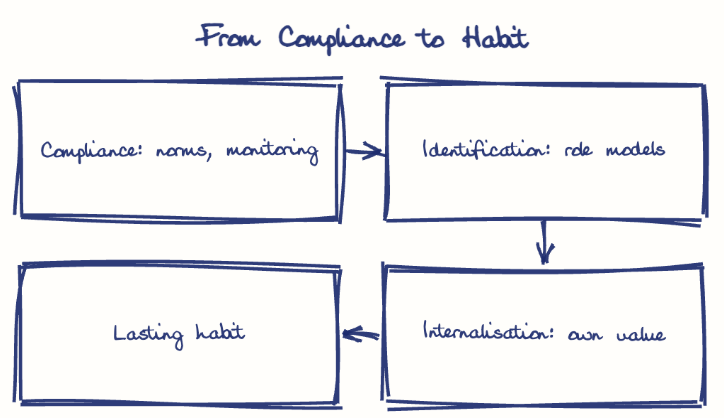
Social influence and persuasion make Swachh Bharat a people's movement by moving citizens from compliance to identification with role models and finally to internalised habit. Community-Led Total Sanitation, Swachh Survekshan rankings and the Darwaza Band campaign helped villages declare themselves open defecation free by October 2019.
Model answer
Ghissu Editorial · Verified 4 Oct 2026 · 264 words
Leading by example
Leaders sweeping streets and nominated public figures created identification, as people copy those they admire.
Community norms
Community-Led Total Sanitation triggers collective disgust at open defecation, and Nigrani Samitis kept a morning watch, making a private act a public norm.
Peer competition
Swachh Survekshan rankings since 2016 made cleanliness civic pride, with Indore's repeated first place resting on household waste segregation.
Trusted messengers
Swachhagrahis, local volunteers known to their neighbours, carried the message door to door more credibly than posters.
Emotional appeal
The "Darwaza Band" campaign with Amitabh Bachchan and the film Toilet: Ek Prem Katha (2017) linked toilets to dignity and women's safety.
Symbolism and reason
Gandhi's spectacles as the logo tied cleanliness to national duty, while health messaging gave reasons that could be internalised.
Ethical limit
Publicly shaming defaulters, reported from some districts, crosses into coercion; persuasion lasts only when it respects dignity.
This model answer is indicative and the model can make mistakes; please verify key facts independently.
Practise this question
1Get the answer sheet
Sized for this question.
2Write your answer
Timed, by hand.
3Get it marked
Your score and what to fix.
This chapter in the exam
Social influence and persuasion2 questions
Asked in 2 of 14 sittings since 2013
Question from the official UPSC Civil Services (Main) Examination 2016 paper. Answer written by Ghissu's engine and checked against our editorial standards. Found an error? Tell us and we correct it within 48 hours.