2016 · GS Paper 4 · Q14 · 25 marks
Saraswati was a successful IT professional in USA. Moved by the patriotic sense of doing something for the country she returned to India. Together with some other like-minded friends, she formed an NGO to build a school for a poor rural community. The objective of the school was to provide the best quality modern education at a nominal cost. She soon discovered that she has to seek permission from a number of Government agencies. The rules and procedures were quite confusing and cumbersome. What frustrated her most was the delays, callous attitude of officials and constant demand for bribes. Her experience and the experience of many others like her has deterred people from taking up social service projects. A measure of Government control over voluntary social work is necessary. But it should not be exercised in a coercive or corrupt manner. What measures can you suggest to ensure that due control is exercised but well meaning, honest NGO efforts are not thwarted ?
In short
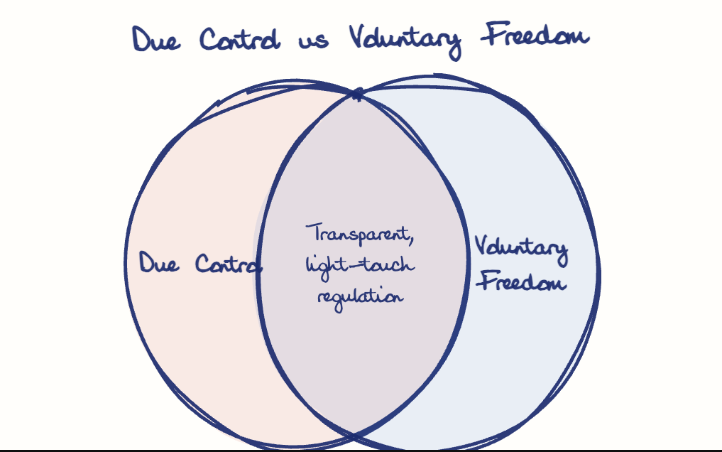
Due control over NGOs should come from simple single-window rules, time-bound deemed approvals and faceless processing that leave no room for bribes, with accreditation and audits for NGOs themselves. Linking permissions through the NGO-DARPAN unique ID under a Lok Sewa Guarantee-style law is the key reform.
Model answer
Ghissu Editorial · Verified 4 Oct 2026 · 287 words
Rent-seeking
Bribe demands turn a safety permission into a toll, an offence under the Prevention of Corruption Act, 1988.
Callousness and bias
Delay reflects Moral Myopia and a Confirmation Bias that every NGO is a fraud, so honest applicants give up and society loses Gandhian Trusteeship.
One simple window
Revive the National Policy on the Voluntary Sector (2007) [committee/report] and link registration, RTE school recognition and tax exemption through the NGO-DARPAN unique ID.
Deadlines, deemed approval
Cover permissions under a law like Madhya Pradesh's Lok Sewa Guarantee Act, 2010 [scheme], with deemed approval after the deadline.
Faceless processing
Remove the bribe counter, as faceless tax assessment (2020) [scheme] did, building honesty into the system rather than leaving it to lone virtue.
Accountable regulator
Publish Sevottam charters, track files on CPGRAMS and RTI, and prosecute under the 2018 anti-corruption amendment.
Accountable NGOs
Require accreditation and audited disclosure for public funds, as Manohar Lal Sharma (2017) [case] directed, plus a social audit by parents.
This model answer is indicative and the model can make mistakes; please verify key facts independently.
Practise this question
1Get the answer sheet
Sized for this question.
2Write your answer
Timed, by hand.
3Get it marked
Your score and what to fix.
This chapter in the exam
Policy Design and Reform3 questions
Asked in 2 of 14 sittings since 2013
- 2017You are a Public Information Officer (PIO) in a government department. You are aware that the RTI Act, 2005 envisages transparency and accountability in administration. The act has functioned as a check on the supposedly arbitrary administrative behaviour and actions. However, as a PIO you have observed that there are citizens who filed RTI applications not for themselves but on behalf of such stakeholders who purportedly want to have access to information to further their own interests. At the same time there are those RTI activists who routinely file RTI applications and attempt to extort money from the decision makers. This type of RTI activism has affected the functioning of the administration adversely and also possibly jeopardizes the genuineness of the applications which are essentially aimed at getting justice. What measures would you suggest to separate genuine and non-genuine applications ? Give merits and demerits of your suggestions.
- 2016Land needed for mining, dams and other large-scale projects is acquired mostly from Adivasis, hill dwellers and rural communities. The displaced persons are paid monetary compensation as per the legal provisions. However, the payment is often tardy. In any case, it cannot sustain the displaced families for long. These people do not possess marketable skills to engage in some other occupation. They end up as low paid migrant labourers. Moreover, their traditional ways of community living are destroyed. Thus, the benefits of development go to industries, industrialists and urban communities whereas the costs are passed on to these poor helpless people. This unjust distribution of costs and benefits is unethical. Suppose you have been entrusted with the task of drafting a better compensation-cum-rehabilitation policy for such displaced persons, how would you approach the problem and what would be the main elements of your suggested policy ?
Question from the official UPSC Civil Services (Main) Examination 2016 paper. Answer written by Ghissu's engine and checked against our editorial standards. Found an error? Tell us and we correct it within 48 hours.