2017 · GS Paper 2 · Q7 · 10 marks
Does the Rights of Persons with Disabilities Act, 2016 ensure effective mechanism for empowerment and inclusion of the intended beneficiaries in the society? Discuss.
In short
The RPwD Act 2016 builds an effective mechanism on paper, with 21 recognised disabilities, 4% job and 5% higher-education reservation and special courts, but delivery remains partial. Rajive Raturi (2024) had to strike down advisory accessibility rules, and Commissioners still cannot compel compliance.
Model answer
Ghissu Editorial · Verified 4 Oct 2026 · 278 words
Wider recognition
Recognised disabilities rise from 7 to 21, adding acid-attack survivors, autism and thalassaemia, so more people can claim rights.
Affirmative action
The Act reserves 4% of government posts and 5% of higher-education seats and guarantees free education to children aged 6 to 18.
Rights over charity
Limited guardianship and legal capacity treat persons with disabilities as decision-makers, not wards.
Enforcement
Chief and State Commissioners, district special courts and penalties for discrimination give these rights a forum.
Delayed accessibility
Rajive Raturi v. Union of India (2024) struck down Rule 15 because accessibility standards were merely advisory.
Toothless oversight
Commissioners can inquire and recommend but cannot compel departments, so complaints stall.
Exclusion by threshold
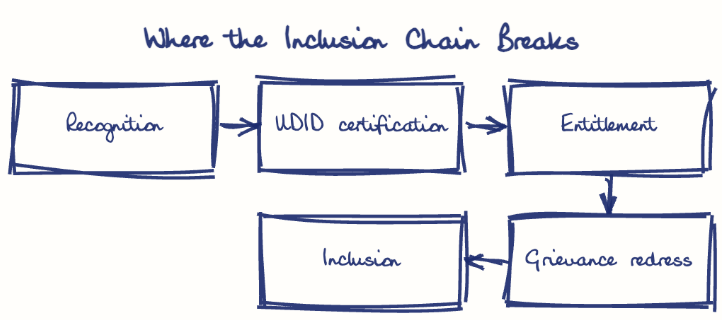
Reservation needs a 40% benchmark disability, and slow UDID certification shuts out many rural claimants.
Private and attitudinal gaps
Private employers face only an equal opportunity policy, and stigma, as Jeeja Ghosh v. Union of India (2016) showed, persists.
This model answer is indicative and the model can make mistakes; please verify key facts independently.
Practise this question
1Get the answer sheet
Sized for this question.
2Write your answer
Timed, by hand.
3Get it marked
Your score and what to fix.
This chapter in the exam
Persons with Disabilities2 questions
Asked in 2 of 14 sittings since 2013
Question from the official UPSC Civil Services (Main) Examination 2017 paper. Answer written by Ghissu's engine and checked against our editorial standards. Found an error? Tell us and we correct it within 48 hours.