2017 · GS Paper 2 · Q6 · 10 marks
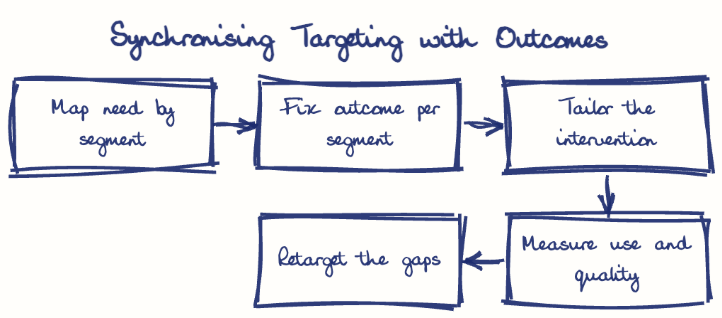
"To ensure effective implementation of policies addressing water, sanitation and hygiene needs the identification of the beneficiary segments is to be synchronized with the anticipated outcomes." Examine the statement in the context of the WASH scheme.
In short
Effective WASH policy needs each beneficiary segment, such as schoolgirls, women water managers and sewer workers, tied to its own outcome of use, safety and quality rather than to a count of toilets or taps. The NSS 76th round (2018) found about 71% rural latrine access against near-total reported coverage.
Model answer
Ghissu Editorial · Verified 4 Oct 2026 · 314 words
Use over construction
SBM-Gramin paired its ₹12,000 toilet incentive with community-led triggering and swachhagrahis, because the outcome sought was behaviour change, and rural India was declared open defecation free in 2019.
Women and girls
The Jal Jeevan Mission trained nearly 25 lakh women to test water with field kits (PIB, 2025), and the Swachh Vidyalaya Abhiyan (2014) built separate toilets for girls to keep them in school.
Workers at risk
NAMASTE (2023) targets sewer and septic tank workers for safe, mechanised cleaning, validating 88,448 workers by September 2025 (PIB).
Output metrics
The NSS 76th round (2018) found about 71% of rural households with latrine access while records showed near-total coverage, so targets tracked construction rather than use.
Slippage and quality
SBM-G Phase II moved to ODF Plus to sustain gains, and the CAG's 2025 Bihar audit noted arsenic, fluoride or iron contamination in 28 of 38 districts, so a tap connection alone cannot be the outcome.
Missed segments
Slum migrants, homeless people and persons with disabilities fall outside household-based targeting.
This model answer is indicative and the model can make mistakes; please verify key facts independently.
Practise this question
1Get the answer sheet
Sized for this question.
2Write your answer
Timed, by hand.
3Get it marked
Your score and what to fix.
This chapter in the exam
Welfare Schemes9 questions
Asked in 6 of 14 sittings since 2013
- 2023"Development and welfare schemes for the vulnerable, by its nature, are discriminatory in approach." Do you agree ? Give reasons for your answer.
- 2022Reforming the government delivery system through the Direct Benefit Transfer Scheme is a progressive step, but it has its limitations too. Comment.
All 9 questions, sorted by sub-topic, with model answers and practice.
Question from the official UPSC Civil Services (Main) Examination 2017 paper. Answer written by Ghissu's engine and checked against our editorial standards. Found an error? Tell us and we correct it within 48 hours.