2018 · GS Paper 1 · Q19 · 15 marks
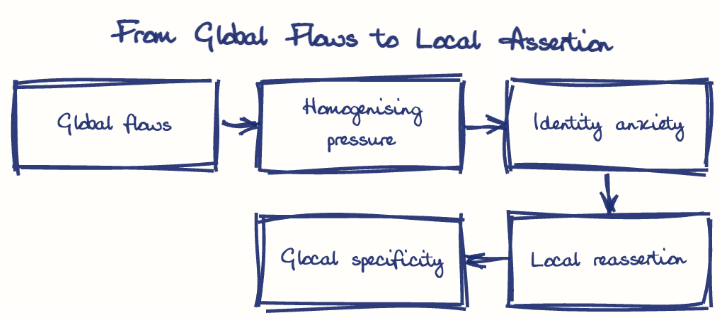
Globalization is generally said to promote cultural homogenization but due to this cultural specificities appear to be strengthened in the Indian Society.' Elucidate.
In short
In India globalization standardises consumption and lifestyles, yet it strengthens cultural specificities by provoking identity anxiety, rewarding glocal products and giving regional voices a mass platform. The 2017 Jallikattu protests and Tamil Nadu's law, upheld by the Supreme Court in 2023, show local assertion by a globally networked generation.
Model answer
Ghissu Editorial · Verified 4 Oct 2026 · 275 words
Uniform consumption
Global brands and fast-food chains spread the same tastes, the McDonaldization Ritzer described.
Lifestyle convergence
English, Western dress and imported occasions such as Valentine's Day standardise aspiration, a newer phase of Srinivas's Westernisation.
Resistance to sameness
Castells's "resistance identities" explain Jallikattu; Tamil Nadu amended the law in 2017, upheld by the Supreme Court in 2023.
Markets localise
Global firms glocalise, as McDonald's beef-free menu and multilingual streaming show.
Technology empowers the local
Cheap data lets folk singers, dialect creators and regional films reach mass audiences, making regional-language users the core of India's internet.
Heritage as global capital
GI tags, UNESCO listings such as Durga Puja (2021) and the International Day of Yoga turn specificity into an asset.
A harder edge
Identity anxiety also fuels nativism, as with Haryana's 2020 local-jobs quota law, struck down in 2023.
Inclusive pluralism
Celebrate the local without turning it against outsiders, guided by Article 29.
Support creators
Fund regional-language content, archives and craft markets so specificity stays economically viable.
This model answer is indicative and the model can make mistakes; please verify key facts independently.
Practise this question
1Get the answer sheet
Sized for this question.
2Write your answer
Timed, by hand.
3Get it marked
Your score and what to fix.
This chapter in the exam
Effects of globalization on Indian society7 questions
Asked in 6 of 14 sittings since 2013
- 2026Evaluate the impact of globalization on Indian youths with reference to social, political, economic and cultural spheres.
- 2025Do you think that globalization results in only an aggressive consumer culture ? Justify your answer.
All 7 questions, sorted by sub-topic, with model answers and practice.
Question from the official UPSC Civil Services (Main) Examination 2018 paper. Answer written by Ghissu's engine and checked against our editorial standards. Found an error? Tell us and we correct it within 48 hours.