2018 · GS Paper 1 · Q11 · 15 marks
The Bhakti movement received a remarkable re-orientation with the advent of Sri Chaitanya Mahaprabhu. Discuss.
In short
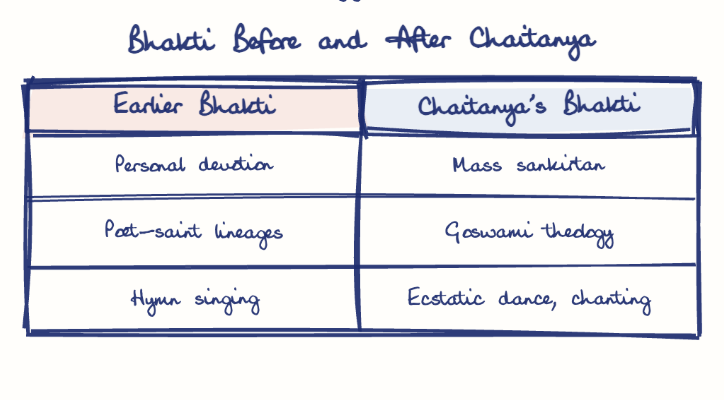
Sri Chaitanya re-oriented Bhakti from individual devotion into a mass, ecstatic and organised movement built on prema for Krishna, congregational sankirtan and a systematic theology. His disciples, the Six Goswamis of Vrindavan, gave Gaudiya Vaishnavism its philosophy of achintya bhedabheda.
Model answer
Ghissu Editorial · Verified 4 Oct 2026 · 283 words
Love over knowledge
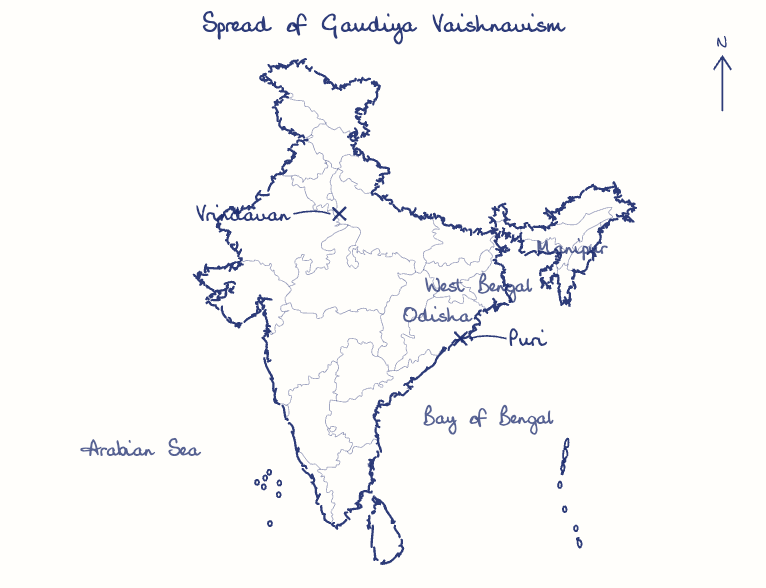
Prema, ecstatic love for Krishna modelled on Radha's longing, ranked above ritual and jnana, and chanting the Hare Krishna mahamantra became the core practice.
From cell to street
Nagar sankirtan in Nabadwip and Puri turned devotion into a public, collective festival.
A systematic theology
The Six Goswamis of Vrindavan gave it achintya bhedabheda, and Rupa Goswami recast bhakti as a rasa.
Doors open to all
Haridas Thakur, born a Muslim, was a close companion, chanting the Name needed no priest, and the Nabadwip sankirtan defied the Qazi's ban.
Vernacular flowering
The Chaitanya Bhagavata and padavali kirtan made Bengali a language of devotion.
Regional spread
Manipur adopted the faith in the 18th century, shaping the Ras Lila of Manipuri dance.
Limits
Unlike Kabir he did not attack caste or idol worship, and hereditary Goswami lineages later grew.
Living heritage
Manipur's Sankirtana, on UNESCO's Intangible Cultural Heritage list since 2013, and the Gaudiya manuscripts deserve community-led preservation.
This model answer is indicative and the model can make mistakes; please verify key facts independently.
Practise this question
1Get the answer sheet
Sized for this question.
2Write your answer
Timed, by hand.
3Get it marked
Your score and what to fix.
This chapter in the exam
Indian Culture - Medieval Times5 questions
Asked in 5 of 14 sittings since 2013
- 2025Examine the main aspects of Akbar's religious syncretism.
- 2023What were the major technological changes introduced during the Sultanate period? How did those technological changes influence the Indian society?
All 5 questions, sorted by sub-topic, with model answers and practice.
Question from the official UPSC Civil Services (Main) Examination 2018 paper. Answer written by Ghissu's engine and checked against our editorial standards. Found an error? Tell us and we correct it within 48 hours.