2019 · GS Paper 1 · Q20 · 15 marks
Are we losing our local identity for the global identity ? Discuss.
In short
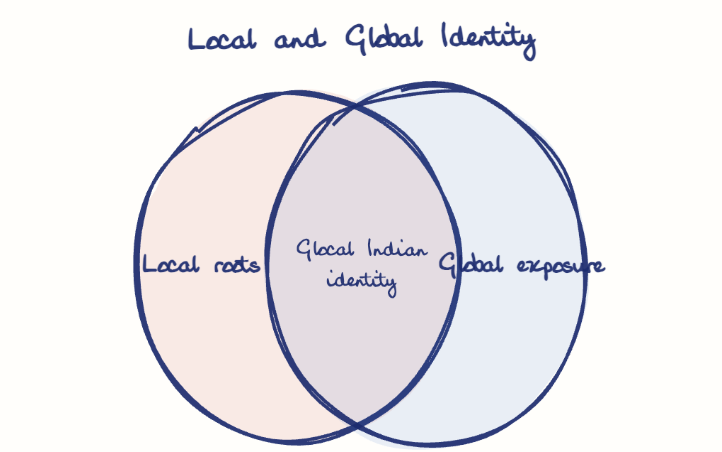
India is not so much losing its local identity as layering a global one over it: language loss and homogenised consumption coexist with glocal adaptation and regional revival. About 220 languages vanished in fifty years (PLSI, 2013), yet Garba gained UNESCO listing in 2023.
Model answer
Ghissu Editorial · Verified 4 Oct 2026 · 274 words
Language shift
English-medium aspiration grows, and UNESCO's Atlas (2009) listed 197 Indian languages as in danger.
Homogenised consumption
Global brands standardise taste in what Ritzer called McDonaldization, and handlooms lose to mass products.
Weakening traditions
Nuclear families, migration and screen leisure erode oral traditions and community rituals.
Westernised aspiration
M.N. Srinivas's Westernisation now works through social media, where global lifestyles set the benchmark for the young.
Glocalisation
Global firms Indianise menus and ads, and Durga Puja, on UNESCO's list since 2021, blends tradition with modern display.
Local goes global
The International Day of Yoga (2014) and the International Year of Millets (2023) carried Indian practices worldwide.
Regional voice online
OTT carries regional cinema such as Kantara (2022) to national and diaspora audiences.
Reassertion
GI tags and NEP 2020's mother-tongue instruction show communities protecting language and heritage.
Languages and crafts
Document endangered tongues and link crafts to markets through GI branding.
Digital culture
Fund regional-language content so the internet amplifies local voices.
This model answer is indicative and the model can make mistakes; please verify key facts independently.
Practise this question
1Get the answer sheet
Sized for this question.
2Write your answer
Timed, by hand.
3Get it marked
Your score and what to fix.
This chapter in the exam
Effects of globalization on Indian society7 questions
Asked in 6 of 14 sittings since 2013
- 2026Evaluate the impact of globalization on Indian youths with reference to social, political, economic and cultural spheres.
- 2025Do you think that globalization results in only an aggressive consumer culture ? Justify your answer.
All 7 questions, sorted by sub-topic, with model answers and practice.
Question from the official UPSC Civil Services (Main) Examination 2019 paper. Answer written by Ghissu's engine and checked against our editorial standards. Found an error? Tell us and we correct it within 48 hours.