2019 · GS Paper 1 · Q15 · 15 marks
How can the mountain ecosystem be restored from the negative impact of development initiatives and tourism?
In short
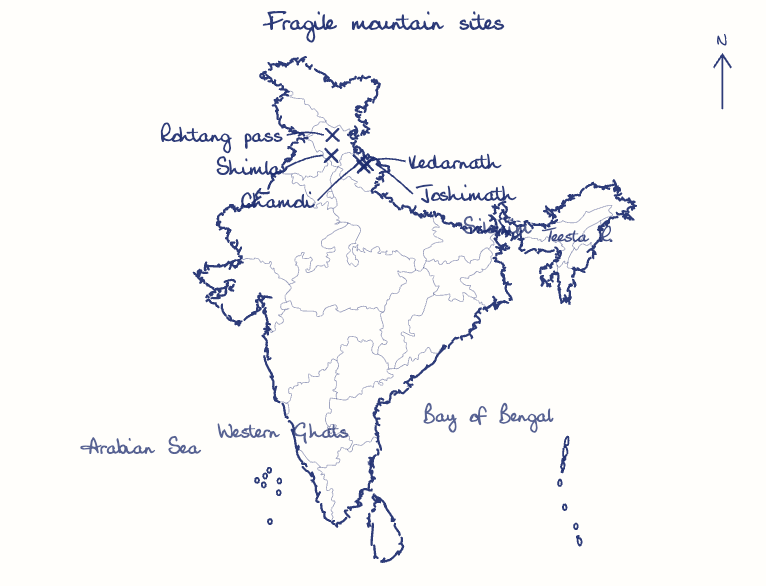
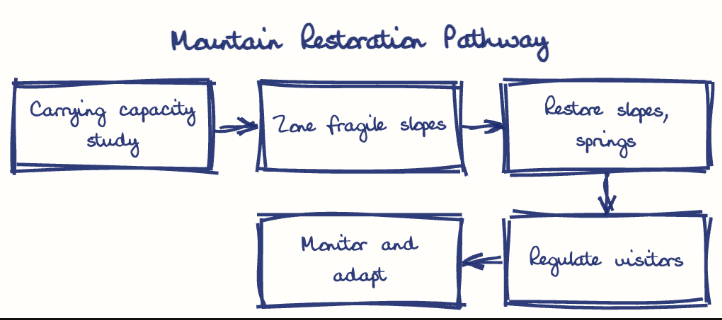
Mountain ecosystems can be restored by siting projects on hazard maps, enforcing eco-sensitive zones, repairing slopes, forests and springs, and capping tourism within carrying capacity. Sikkim's Dhara Vikas springshed programme and the NGT's 2015 vehicle cap at Rohtang Pass show restoration and regulation at work.
Model answer
Ghissu Editorial · Verified 4 Oct 2026 · 277 words
Science-led siting
Roads and dams must follow hazard maps, as the Mishra Committee (1976) warned for Joshimath and the Ravi Chopra committee urged after Kedarnath (2014).
Eco-sensitive zoning
Enforce zones like the Bhagirathi ESZ (2012) and the Gadgil and Kasturirangan recommendations for the Western Ghats.
Slope, forest and spring repair
Use bio-engineering such as vetiver, replant native oak, and revive springs as Sikkim's Dhara Vikas programme does.
Visitor caps
The NGT's vehicle cap for Rohtang (2015) and Bhutan's Sustainable Development Fee limit numbers.
Waste and water control
Himachal's plastic bag ban (2009) and Nepal's Everest garbage deposit (2014) cut litter, while Shimla's 2018 water crisis demands rainwater harvesting in hill towns.
Community stewardship
Uttarakhand's Van Panchayats guard village forests, and Ladakh's homestays link tourist income to conservation.
Carrying-capacity plans
Act on the Supreme Court's 2023 call for carrying-capacity studies of Himalayan states.
Early warning and funding
Monitor glacial lakes under NDMA's 2020 GLOF guidelines and fund restoration through the National Mission for Sustaining the Himalayan Ecosystem.
This model answer is indicative and the model can make mistakes; please verify key facts independently.
Practise this question
1Get the answer sheet
Sized for this question.
2Write your answer
Timed, by hand.
3Get it marked
Your score and what to fix.
This chapter in the exam
International Trade / Transport and Activities12 questions
Asked in 9 of 14 sittings since 2013
- 2026"The centre of global trade is gradually shifting from the Atlantic region to the Indo-Pacific region." Examine this statement.
- 2022Mention the significance of straits and isthmus in international trade.
All 12 questions, sorted by sub-topic, with model answers and practice.
Question from the official UPSC Civil Services (Main) Examination 2019 paper. Answer written by Ghissu's engine and checked against our editorial standards. Found an error? Tell us and we correct it within 48 hours.