2019 · GS Paper 2 · Q18 · 15 marks
Performance of welfare schemes that are implemented for vulnerable sections is not so effective due to absence of their awareness and active involvement at all stages of policy process. — Discuss.
In short
Welfare schemes for vulnerable sections underperform largely because beneficiaries are unaware and excluded from design, delivery and monitoring, though targeting, funding and design failures also matter. A 2024 CAG audit found Bihar's construction workers' board spent only 5 to 34% of its funds on welfare in 2017-22.
Model answer
Ghissu Editorial · Verified 4 Oct 2026 · 270 words
Top-down design
PESA, 1996, mandates gram sabha consultation in Scheduled Areas, yet several states framed its rules only decades later.
Low awareness at access
The CAG (2025) found only about half of 1.44 crore registered construction workers in Uttar Pradesh had renewed membership by March 2022.
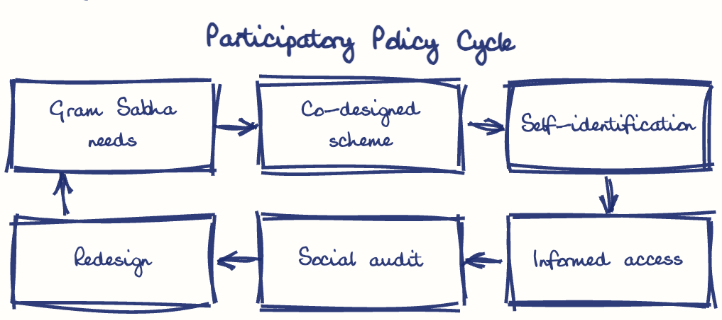
Participation works
MKSS jan sunwais in Rajasthan fed into the RTI Act, 2005, and Andhra Pradesh's SSAAT (2009) made villagers MGNREGA auditors.
Targeting errors
Old SECC 2011 lists and Aadhaar failures exclude the eligible, as the 2017 hunger death of Santoshi Kumari in Jharkhand showed.
Funds and design
Bihar's board left ₹246 crore uncredited, and the NSAP old-age pension has stayed at ₹200 a month since 2007.
Outreach and planning
Use SHG networks like Kudumbashree and let gram sabhas set priorities through the People's Plan Campaign.
Social audit by law
Extend Meghalaya's 2017 social audit law nationwide, with offline options when authentication fails.
This model answer is indicative and the model can make mistakes; please verify key facts independently.
Practise this question
1Get the answer sheet
Sized for this question.
2Write your answer
Timed, by hand.
3Get it marked
Your score and what to fix.
This chapter in the exam
Welfare Schemes9 questions
Asked in 6 of 14 sittings since 2013
- 2023"Development and welfare schemes for the vulnerable, by its nature, are discriminatory in approach." Do you agree ? Give reasons for your answer.
- 2022Reforming the government delivery system through the Direct Benefit Transfer Scheme is a progressive step, but it has its limitations too. Comment.
All 9 questions, sorted by sub-topic, with model answers and practice.
Question from the official UPSC Civil Services (Main) Examination 2019 paper. Answer written by Ghissu's engine and checked against our editorial standards. Found an error? Tell us and we correct it within 48 hours.