2020 · GS Paper 1 · Q7 · 10 marks
Account for the present location of iron and steel industries away from the source of raw material, by giving examples.
In short
Iron and steel plants now locate on coasts and near markets because modern furnaces use less coal, coking coal and ore are imported, and scrap-based mini mills follow buyers. Visakhapatnam, JSW Dolvi and AM/NS Hazira in India, and Japan's Tokyo Bay plants, show the shift.
Model answer
Ghissu Editorial · Verified 4 Oct 2026 · 289 words
Falling coal input
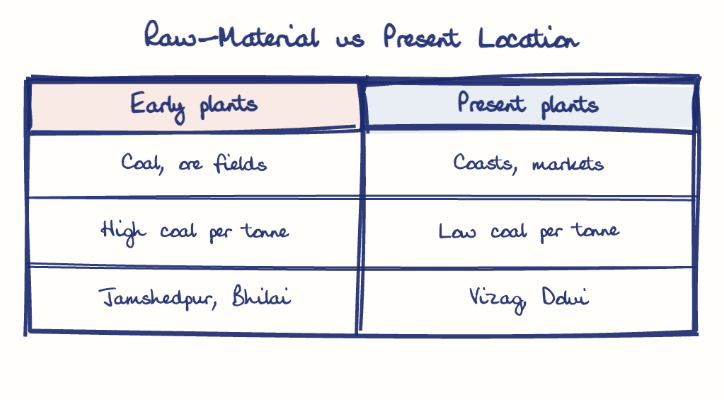
Modern blast furnaces need far less coal per tonne of steel, so sitting on coalfields no longer saves much freight.
Imported raw material
India imports most of its coking coal, largely from Australia, and Japan and Korea import nearly all inputs, so ports become the cheapest assembly point.
Scrap technology
Electric arc and induction furnaces run on scrap and sponge iron, letting mini mills locate near scrap and buyers.
Market pull
Bulky steel is costly to distribute, so plants follow automobile, construction and shipbuilding demand.
Indian coastal plants
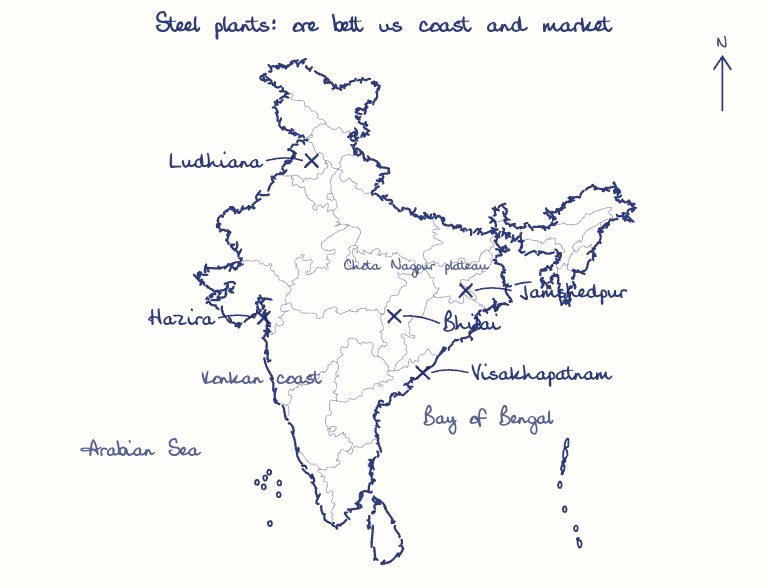
Visakhapatnam Steel Plant, JSW Dolvi and AM/NS Hazira stand far from the Chota Nagpur ore belt.
Market mini mills
Mandi Gobindgarh and Ludhiana in Punjab roll scrap for north India's engineering market.
Global tidewater plants
Japan's Tokyo Bay plants, POSCO's Pohang and China's Baoshan run on imported ore, while Gary grew on Lake Michigan near the Chicago market.
This model answer is indicative and the model can make mistakes; please verify key facts independently.
Practise this question
1Get the answer sheet
Sized for this question.
2Write your answer
Timed, by hand.
3Get it marked
Your score and what to fix.
This chapter in the exam
International Trade / Transport and Activities12 questions
Asked in 9 of 14 sittings since 2013
- 2026"The centre of global trade is gradually shifting from the Atlantic region to the Indo-Pacific region." Examine this statement.
- 2022Mention the significance of straits and isthmus in international trade.
All 12 questions, sorted by sub-topic, with model answers and practice.
Question from the official UPSC Civil Services (Main) Examination 2020 paper. Answer written by Ghissu's engine and checked against our editorial standards. Found an error? Tell us and we correct it within 48 hours.