2020 · GS Paper 3 · Q16 · 15 marks
Describe the benefits of deriving electric energy from sunlight in contrast to the conventional energy generation. What are the initiatives offered by our Government for this purpose?
In short
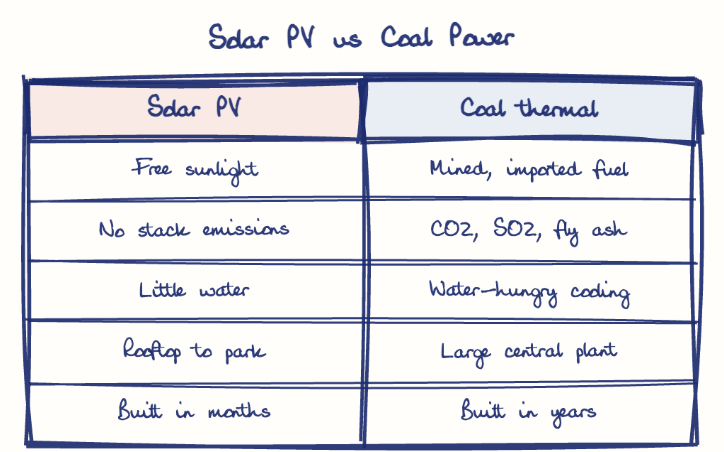
Solar power is cheaper, cleaner, faster to build and more decentralised than coal-based generation, and the government backs it through the National Solar Mission, solar parks, PM-KUSUM, PM Surya Ghar and a manufacturing PLI. Solar tariffs fell from ₹6.17/kWh in 2014-15 to ₹2.15/kWh in 2024-25.
Model answer
Ghissu Editorial · Verified 4 Oct 2026 · 314 words
Cheaper electricity
Solar tariffs fell from ₹6.17/kWh in 2014-15 to ₹2.15/kWh in 2024-25 (PIB), below most new coal power, because the fuel is free.
Energy security
Every solar unit cuts coal and fuel imports and exposure to price shocks like the 2022 fuel crisis.
Power at the point of use
Rooftop panels and solar pumps avoid transmission losses and replace diesel and kerosene.
Mission and alliance
The National Solar Mission (2010) set a 100 GW target, and India co-founded the International Solar Alliance at COP21 in 2015.
Parks and pumps
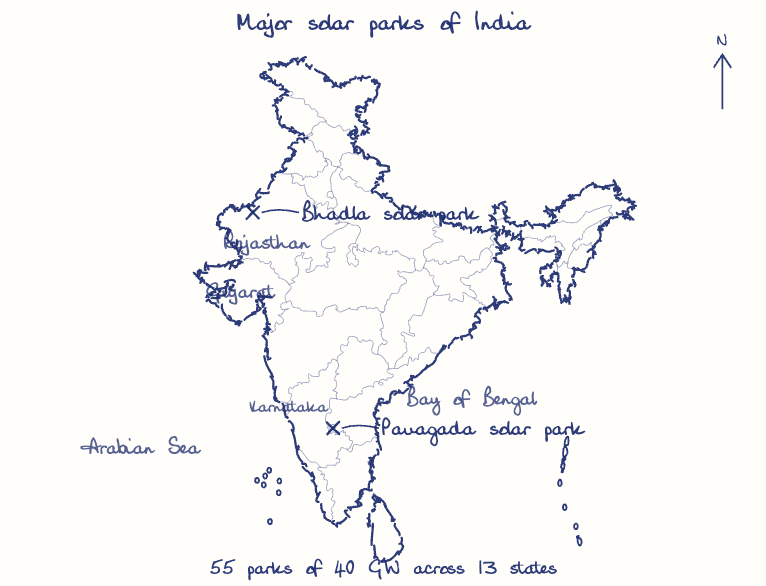
55 solar parks of 40 GW are sanctioned across 13 states, and PM-KUSUM has backed about 9.2 lakh solar pumps (PIB, 2025).
Rooftops
PM Surya Ghar (2024) reached nearly 24 lakh homes by December 2025 towards one crore.
Manufacturing
The PLI scheme for high-efficiency modules and the ALMM list doubled module capacity from 38 GW to 74 GW in a year (PIB, 2025).
Storage and supply chain
Only about 5.5 GW of storage backs 243 GW of renewables, and India has no polysilicon capacity (Standing Committee on Energy, 2025).
This model answer is indicative and the model can make mistakes; please verify key facts independently.
Practise this question
1Get the answer sheet
Sized for this question.
2Write your answer
Timed, by hand.
3Get it marked
Your score and what to fix.
This chapter in the exam
Developments, Applications and Effects in Everyday Life23 questions
Asked in 13 of 14 sittings since 2013
- 2026Distinguish between a Fast Breeder Reactor (FBR) and a thermal nuclear reactor. In the context of first indigenously developed prototype FBR at Kalpakkam, explain the term 'criticality'. What are its implications for clean energy future of our country? (Answer in 150 words)
- 2025How can India achieve energy independence through clean technology by 2047 ? How can biotechnology play a crucial role in this endeavour ?
All 23 questions, sorted by sub-topic, with model answers and practice.
Question from the official UPSC Civil Services (Main) Examination 2020 paper. Answer written by Ghissu's engine and checked against our editorial standards. Found an error? Tell us and we correct it within 48 hours.