2020 · GS Paper 3 · Q14 · 15 marks
Suggest measures to improve water storage and irrigation system to make its judicious use under depleting scenario.
In short
India can use water judiciously by storing more of the monsoon in dams, tanks and aquifers and by cutting losses through piped canals, drip irrigation, farmer-run outlets and water-wise crops. The 161 reservoirs the CWC monitors make up only about 71% of the 257.8 BCM of storage India has built (CWC, 2025).
Model answer
Ghissu Editorial · Verified 4 Oct 2026 · 280 words
Finish and restore
AIBP completed 69 of 99 priority projects, adding 26.84 lakh hectares of potential (Jal Shakti, 2025), and DRIP desilts old dams.
Revive small storages
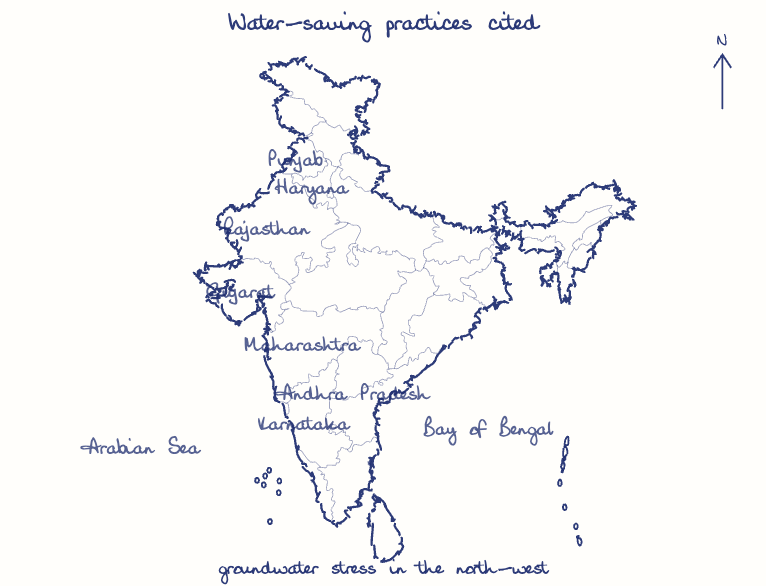
Mission Amrit Sarovar (2022) targets 75 water bodies per district, and Tarun Bharat Sangh's johads revived the Arvari river.
Bank water underground
The CGWB recharge master plan (2020) and Atal Bhujal Yojana's community water budgets turn runoff into recharge.
Pipes and drip
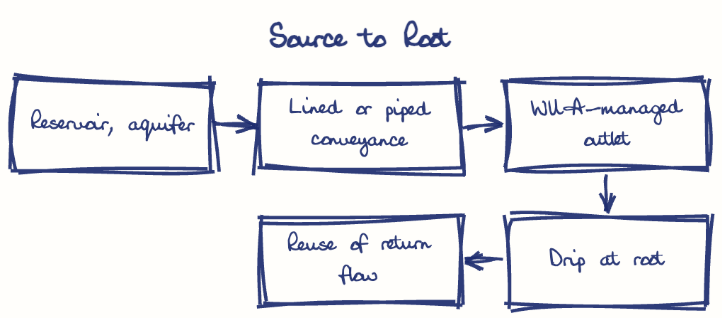
Piped networks such as Karnataka's Ramthal project and drip under Per Drop More Crop lift application efficiency to about 90% from 35-40% under flooding.
Farmers run outlets
Andhra Pradesh's 1997 Act and Maharashtra's volumetric supply to Water Users' Associations ensure rationed, timely delivery.
Match crops to water
Haryana's Mera Pani Meri Virasat (2020) pays farmers to leave paddy.
Price power
Metered farm power and PM-KUSUM solar pumps curb over-pumping.
One water institution
The Mihir Shah Committee (2016) urged a National Water Commission uniting CWC and CGWB.
This model answer is indicative and the model can make mistakes; please verify key facts independently.
Practise this question
1Get the answer sheet
Sized for this question.
2Write your answer
Timed, by hand.
3Get it marked
Your score and what to fix.
This chapter in the exam
Irrigation5 questions
Asked in 5 of 14 sittings since 2013
- 2024What are the major challenges faced by Indian irrigation system in recent times? State the measures taken by the government for efficient irrigation management.
- 2021How and to what extent would micro-irrigation help in solving India's water crisis ?
All 5 questions, sorted by sub-topic, with model answers and practice.
Question from the official UPSC Civil Services (Main) Examination 2020 paper. Answer written by Ghissu's engine and checked against our editorial standards. Found an error? Tell us and we correct it within 48 hours.