2021 · GS Paper 1 · Q1 · 10 marks
Evaluate the nature of the Bhakti literature and its contribution to Indian culture.
In short
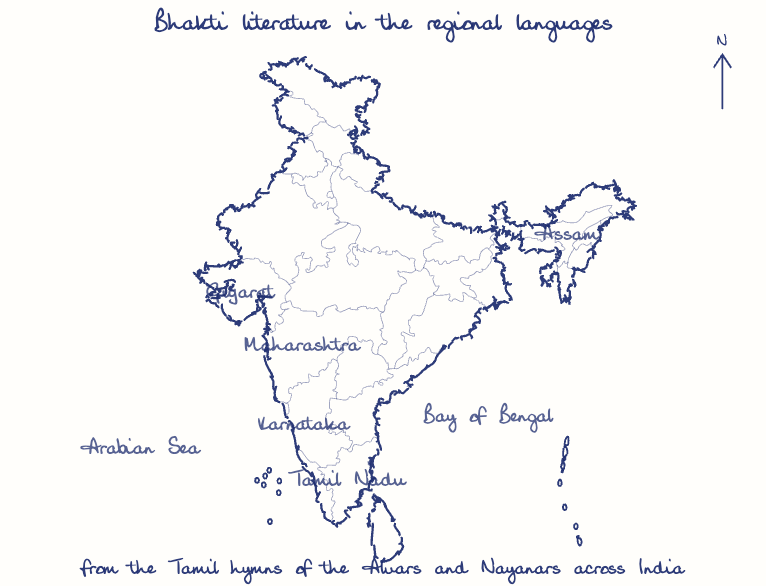
Bhakti literature was vernacular, sung and devotional, giving voice to low-caste saints and women, though it reformed hearts more than caste structures. It gave regional languages classics like the Ramcharitmanas, shaped Carnatic music and Sattriya, and built a composite culture seen in the Adi Granth.
Model answer
Ghissu Editorial · Verified 4 Oct 2026 · 264 words
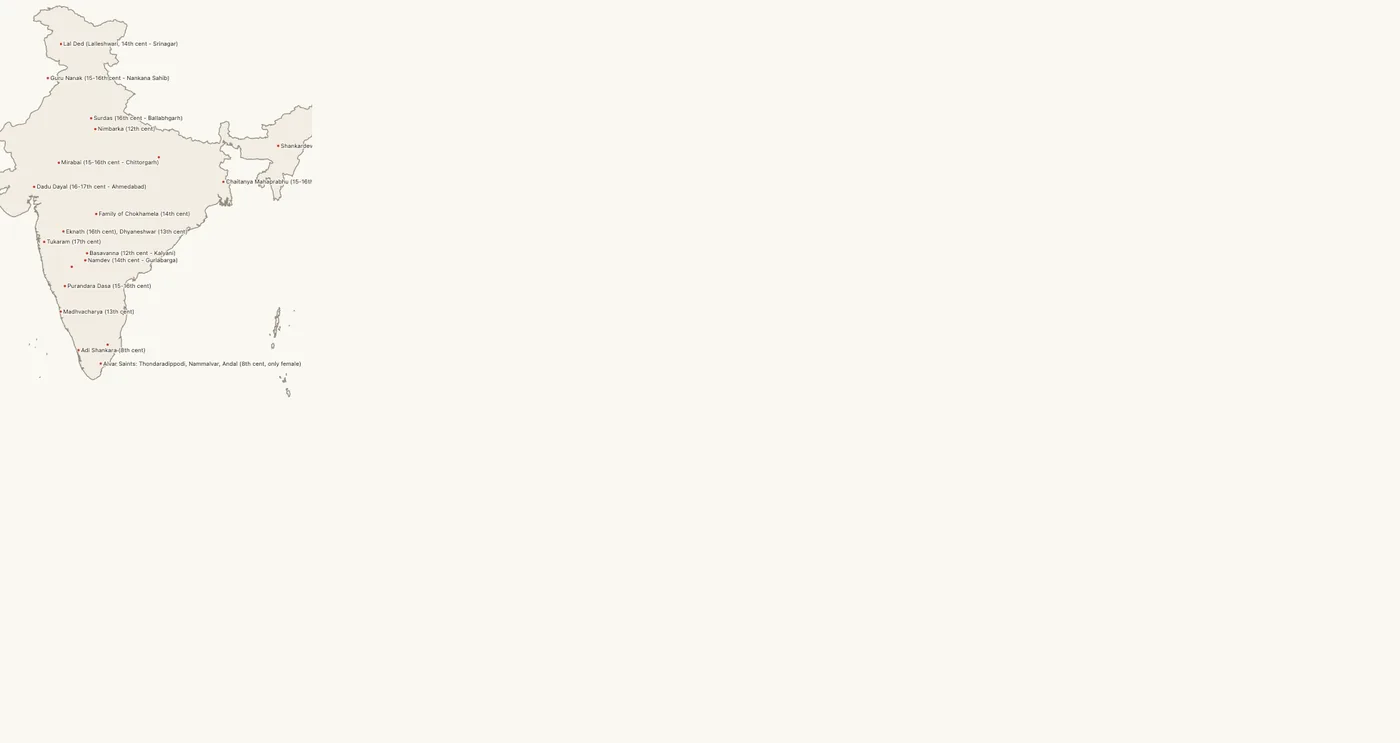
Vernacular and sung
Basavanna's Kannada vachanas and Jnaneshwar's Marathi Jnaneshwari (1290) reached those shut out of Sanskrit learning.
Personal surrender over ritual
Saguna (Tulsidas, Mirabai) and nirguna (Kabir, Ravidas) saints placed loving devotion above priestly ritual.
Voices from the margins
Weaver, cobbler and tailor saints and women such as Akka Mahadevi and Lal Ded challenged caste pride and convention.
Uneven radicalism
Caste hierarchy survived, many sects later rebuilt ritual around their founders, and Mirabai's verses still speak partly in a devoted wife's idiom, so it reformed hearts more than structures.
Classics for regional languages
Tulsidas's Ramcharitmanas and Sankardev's Borgeets in Assam gave regional languages enduring classics.
Music and dance
Purandara Dasa shaped Carnatic music teaching, and Sankardev's tradition grew into Sattriya, recognised as classical by the Sangeet Natak Akademi in 2000.
Composite culture
The Adi Granth (1604) places Kabir, Ravidas, Namdev and Sheikh Farid beside the Sikh Gurus.
Ideals for modern India
Gandhi's love of Narsinh Mehta's "Vaishnava Jana To" and Ambedkar's reverence for Kabir show its lasting pull.
This model answer is indicative and the model can make mistakes; please verify key facts independently.
Practise this question
1Get the answer sheet
Sized for this question.
2Write your answer
Timed, by hand.
3Get it marked
Your score and what to fix.
This chapter in the exam
Literature5 questions
Asked in 5 of 14 sittings since 2013
- 2024Estimate the contribution of Pallavas of Kanchi for the development of art and literature of South India.
- 2020Persian literary sources of medieval India reflect the spirit of the age. Comment.
All 5 questions, sorted by sub-topic, with model answers and practice.
Question from the official UPSC Civil Services (Main) Examination 2021 paper. Answer written by Ghissu's engine and checked against our editorial standards. Found an error? Tell us and we correct it within 48 hours.