2021 · GS Paper 2 · Q1 · 10 marks
Constitutional Morality is rooted in the Constitution itself and is founded on its essential facets. Explain the doctrine of Constitutional Morality with the help of relevant judicial decisions.
In short
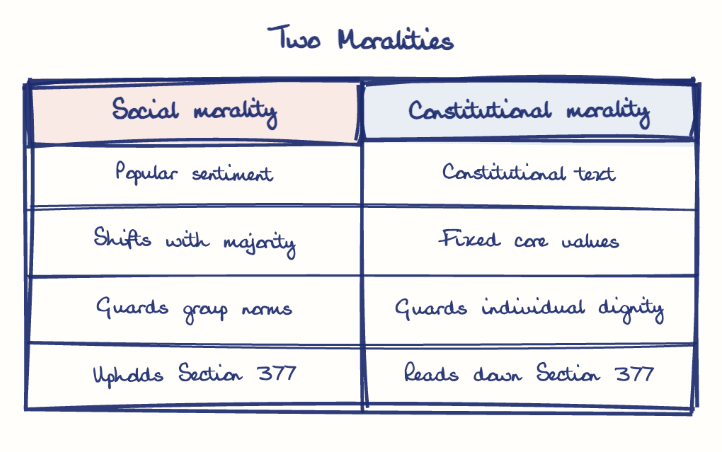
Constitutional morality is fidelity to the Constitution's core values of justice, liberty, equality and fraternity, which courts use to restrain power and protect individuals against majoritarian sentiment. In Navtej Singh Johar (2018) the Supreme Court held it must prevail over social morality.
Model answer
Ghissu Editorial · Verified 4 Oct 2026 · 290 words
Rooted in the text
Its content comes from the Preamble's justice, liberty, equality and fraternity and from Fundamental Rights, not from a judge's personal ethics.
Spirit over letter
Following Grote, it asks office-holders to honour constitutional forms and conventions even where the text is silent.
Institutional restraint
It binds every organ to the separation of powers and the rule of law.
Transformative purpose
It treats the Constitution as a charter to change unjust social hierarchies.
Manoj Narula (2014)
The Court said constitutional morality requires the Prime Minister to avoid appointing ministers facing charges of heinous crimes.
NCT of Delhi (2018)
It treated the doctrine as a check on high functionaries and citizens alike, binding the Lieutenant Governor to act in harmony with constitutional norms.
Navtej and Joseph Shine (2018)
Section 377 was read down and adultery decriminalised, placing dignity above social disapproval.
Sabarimala (2018)
The majority ended the exclusion of women, while Justice Indu Malhotra's dissent urged respect for religious freedom.
This model answer is indicative and the model can make mistakes; please verify key facts independently.
Practise this question
1Get the answer sheet
Sized for this question.
2Write your answer
Timed, by hand.
3Get it marked
Your score and what to fix.
This chapter in the exam
Historical Underpinnings, Evolution & Features2 questions
Asked in 2 of 14 sittings since 2013
Question from the official UPSC Civil Services (Main) Examination 2021 paper. Answer written by Ghissu's engine and checked against our editorial standards. Found an error? Tell us and we correct it within 48 hours.