2021 · GS Paper 2 · Q2 · 10 marks
Discuss the desirability of greater representation to women in the higher judiciary to ensure diversity, equity and inclusiveness.
In short
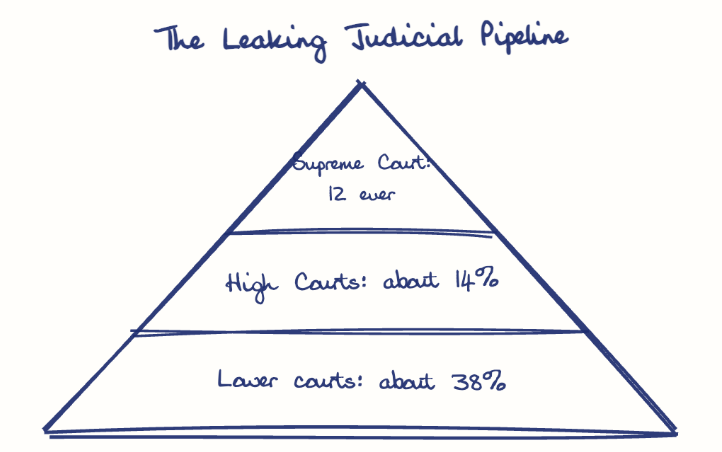
Greater representation of women in the higher judiciary is desirable because it brings diverse perspectives, more equitable treatment of litigants and inclusive legitimacy to the courts. The Supreme Court has had only 12 women judges since 1950, and women hold about 14% of High Court posts.
Model answer
Ghissu Editorial · Verified 4 Oct 2026 · 284 words
Diversity of perspective
Women judges bring lived experience to cases on sexual violence, family and work, enriching deliberation without diluting merit.
Equity for litigants
In Aparna Bhat (2021), the Supreme Court set aside a bail condition asking an accused to have the complainant tie him a rakhi and warned against gender stereotyping.
Inclusive legitimacy
Courts earn trust when women see themselves on the bench, serving SDG 16.7's call for representative decision-making.
Role models
Justice B.V. Nagarathna, in line to be the first woman CJI in 2027, draws more women into the profession.
Opaque collegium
Appointments since the Second Judges Case (1993) follow no published diversity criterion.
Entry hurdles
A mandatory Bar practice rule for civil judges, set at three years in 2025 and cut to one in 2026, may still deter young women lawyers facing family pressure early in their careers.
Remedies
A diversity clause in the Memorandum of Procedure, more women senior advocates and women's reservation in subordinate judicial services, as Bihar provides.
This model answer is indicative and the model can make mistakes; please verify key facts independently.
Practise this question
1Get the answer sheet
Sized for this question.
2Write your answer
Timed, by hand.
3Get it marked
Your score and what to fix.
This chapter in the exam
Structure, Organization and Functioning of the Union Judiciary7 questions
Asked in 7 of 14 sittings since 2013
- 2026What is meant by judicial legislation ? In this context, discuss the verdicts of the apex court allowing “passive euthanasia” and a “living will”.
- 2024Explain the reasons for the growth of public interest litigation in India. As a result of it, has the Indian Supreme Court emerged as the world's most powerful judiciary?
All 7 questions, sorted by sub-topic, with model answers and practice.
Question from the official UPSC Civil Services (Main) Examination 2021 paper. Answer written by Ghissu's engine and checked against our editorial standards. Found an error? Tell us and we correct it within 48 hours.