2021 · GS Paper 2 · Q12 · 15 marks
Though the Human Rights Commissions have contributed immensely to the protection of human rights in India, yet they have failed to assert themselves against the mighty and powerful. Analyzing their structural and practical limitations, suggest remedial measures.
In short
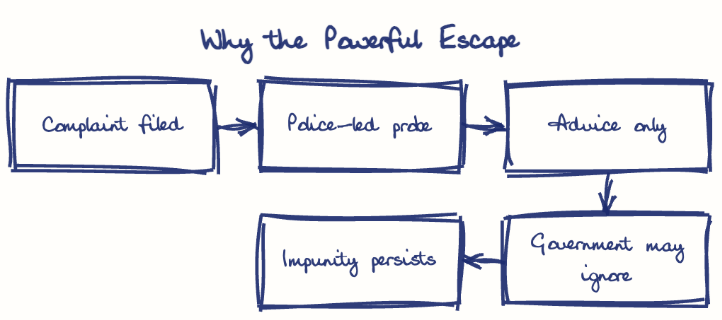
Human Rights Commissions fail the powerful test because the 1993 Act makes their findings advisory, excludes armed forces inquiries, bars complaints older than a year and leaves them dependent on deputed police and the executive. GANHRI deferred the NHRC's re-accreditation in 2023 over such concerns.
Model answer
Ghissu Editorial · Verified 4 Oct 2026 · 270 words
Recommendatory power
Section 18 lets them only recommend prosecution or relief; governments can reject the advice.
Armed forces carve-out
Section 19 limits the NHRC to seeking a Union report on armed forces complaints, even in AFSPA areas.
One-year bar
Section 36(2) bars inquiry into violations older than a year.
Executive-shaped composition
A PM-led selection panel and reappointment since 2019 make them post-retirement berths.
Compensation as closure
The Punjab mass cremations case (1996 reference) ended in compensation, not culpability.
Vacancies and dependence
Headless State commissions and Home Ministry budgets erode independence.
Delayed scrutiny
Annual reports reach Parliament late and are rarely debated, so ignoring advice costs nothing.
Binding orders with appeal
Make recommendations binding unless challenged in the High Court.
Own investigation wing
Create an independent cadre and remove the one-year bar and armed forces carve-out.
Plural appointments
Follow the Paris Principles with civil society members and transparent selection.
This model answer is indicative and the model can make mistakes; please verify key facts independently.
Practise this question
1Get the answer sheet
Sized for this question.
2Write your answer
Timed, by hand.
3Get it marked
Your score and what to fix.
This chapter in the exam
Statutory Bodies6 questions
Asked in 5 of 14 sittings since 2013
- 2023Who are entitled to receive free legal aid ? Assess the role of the National Legal Services Authority (NALSA) in rendering free legal aid in India.
- 2023Discuss the role of the Competition Commission of India in containing the abuse of dominant position by the Multi-National Corporations in India. Refer to the recent decisions.
All 6 questions, sorted by sub-topic, with model answers and practice.
Question from the official UPSC Civil Services (Main) Examination 2021 paper. Answer written by Ghissu's engine and checked against our editorial standards. Found an error? Tell us and we correct it within 48 hours.