2021 · GS Paper 3 · Q18 · 15 marks
Describe the various causes and the effects of landslides. Mention the important components of the National Landslide Risk Management Strategy.
In short
Landslides result from fragile geology, intense rain, earthquakes and slope-disturbing construction, and they kill suddenly, cut connectivity and destroy livelihoods. The NDMA's National Landslide Risk Management Strategy (2019) rests on hazard mapping, early warning, awareness, capacity building, regulation and slope stabilisation.
Model answer
Ghissu Editorial · Verified 4 Oct 2026 · 282 words
Fragile terrain
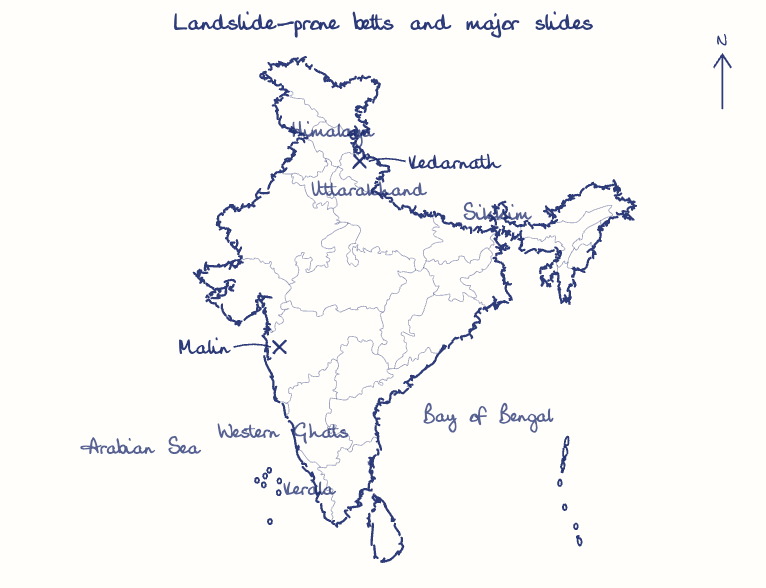
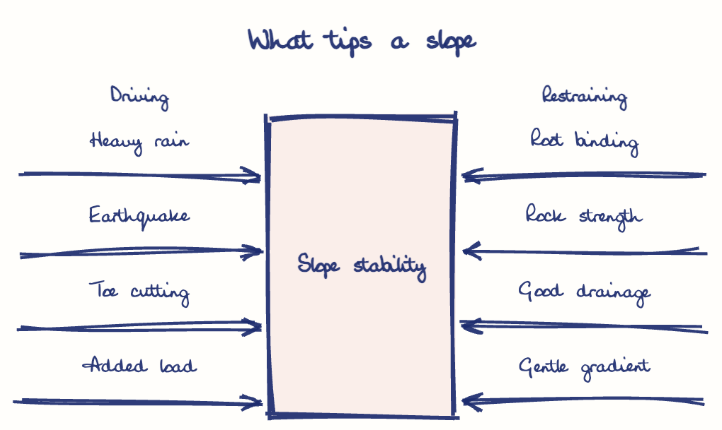
Fractured Himalayan rocks along thrusts and weathered laterite in the Western Ghats fail easily on steep slopes.
Rain and quakes
Cloudbursts raise pore-water pressure, as at Kedarnath in 2013, while the 2011 Sikkim earthquake set off numerous slides.
Human disturbance
Road cutting, quarrying, deforestation and unregulated building undercut slopes, as at Malin in Pune district in 2014.
Loss of life
Malin lost about 150 people, and Kavalappara and Puthumala in Kerala were buried in 2019.
Economic loss
Highways are cut, and hydropower plants, farms and pilgrimage traffic suffer.
Ecology and displacement
Debris dams rivers, and survivors lose homes and land.
Hazard mapping
Susceptibility and zonation maps, building on GSI's 1:50,000 work, locate risk.
Early warning
Rainfall thresholds and field instruments give timely alerts.
Awareness and capacity
Training engineers, planners and communities.
Regulation and mitigation
Mountain zone regulations, slope stabilisation and a proposed Special Purpose Vehicle.
Binding maps and green engineering
Make zones mandatory in master plans and pair drainage with vetiver on cut slopes.
This model answer is indicative and the model can make mistakes; please verify key facts independently.
Practise this question
1Get the answer sheet
Sized for this question.
2Write your answer
Timed, by hand.
3Get it marked
Your score and what to fix.
This chapter in the exam
Landslides & Avalanches2 questions
Asked in 2 of 14 sittings since 2013
Question from the official UPSC Civil Services (Main) Examination 2021 paper. Answer written by Ghissu's engine and checked against our editorial standards. Found an error? Tell us and we correct it within 48 hours.