2021 · GS Paper 3 · Q3 · 10 marks
How did land reforms in some parts of the country help to improve the socio-economic conditions of marginal and small farmers ?
In short
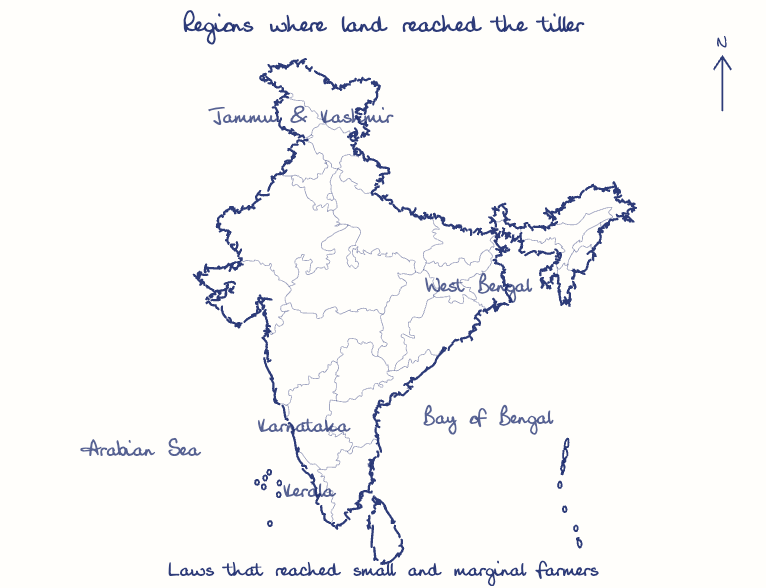
Where land reforms were enforced, as in Jammu and Kashmir, Kerala, Karnataka and West Bengal, small and marginal farmers gained ownership, a fairer crop share, credit, homesteads and political voice. Operation Barga recorded over a million sharecroppers in West Bengal with heritable rights.
Model answer
Ghissu Editorial · Verified 4 Oct 2026 · 276 words
Land without a price
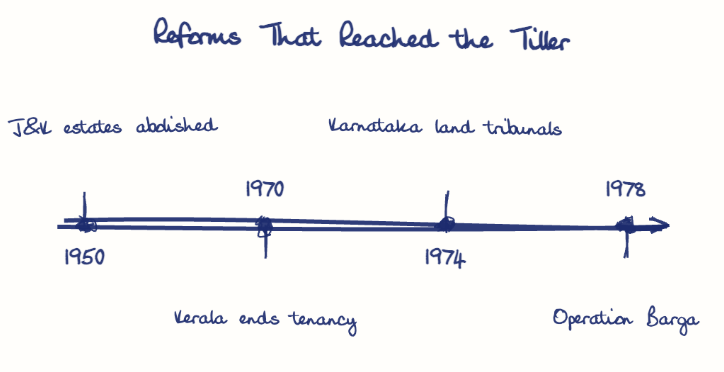
Jammu and Kashmir's Big Landed Estates Abolition Act, 1950 capped holdings at 22.75 acres and gave the surplus to tillers without compensation.
Ownership for tenants
Kerala's 1969 amendment abolished tenancy from 1970, and Karnataka's 1974 land tribunals let tenants claim occupancy.
Fairer crop share
Operation Barga recorded over a million sharecroppers with heritable rights and a 75% share when they bore input costs, linked to higher rice yields.
Credit access
A recorded name opened institutional loans in place of the landlord-moneylender, so tenants could invest in pumps, seed and fertiliser.
Homestead security
Kerala's kudikidappukar won rights to their house sites, ending the eviction threat that bound them to landlords.
Weakened caste hierarchy
The end of the jenmi system loosened caste dominance and fed Kerala's later gains in literacy and health.
Political voice
Former bargadars entered West Bengal's panchayats elected from 1978, shifting village power away from landlords.
This model answer is indicative and the model can make mistakes; please verify key facts independently.
Practise this question
1Get the answer sheet
Sized for this question.
2Write your answer
Timed, by hand.
3Get it marked
Your score and what to fix.
This chapter in the exam
Land Reforms in India7 questions
Asked in 7 of 14 sittings since 2013
- 2024What were the factors responsible for the successful implementation of land reforms in some parts of the country? Elaborate.
- 2023State the objectives and measures of land reforms in India. Discuss how land ceiling policy on landholding can be considered as an effective reform under economic criteria.
All 7 questions, sorted by sub-topic, with model answers and practice.
Question from the official UPSC Civil Services (Main) Examination 2021 paper. Answer written by Ghissu's engine and checked against our editorial standards. Found an error? Tell us and we correct it within 48 hours.