2022 · GS Paper 2 · Q15 · 15 marks
Discuss the role of the Election Commission of India in the light of the evolution of the Model Code of Conduct.
In short
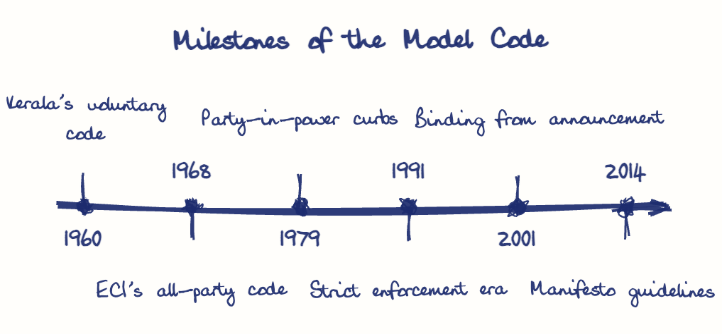
The Election Commission has grown with the Model Code of Conduct from a consensus builder into an enforcer of a level playing field, using Article 324 since the code has no statute. Its 1979 curbs on the party in power made the ECI the main check on incumbency.
Model answer
Ghissu Editorial · Verified 4 Oct 2026 · 309 words
Consensus builder
The ECI nationalised the Kerala code from the 1962 polls by negotiating it with recognised parties, so its authority rests on consent.
Umpire against incumbency
The 1979 "party in power" clauses barred ministers from announcing new grants or using official machinery once polls are called.
Enforcer without a statute
Since T.N. Seshan's tenure, the ECI enforces the code through Article 324 orders, transfers and Paragraph 16A of the Symbols Order; in 2019 it barred Yogi Adityanath and Mayawati from campaigning.
Adapter
Manifesto guidelines after S. Subramaniam Balaji (2013) and the cVIGIL app, with over four lakh complaints in 2024, extended its reach.
No legal sanction
Breaches mostly draw notices or short bans, and the ECI opposed statutory status in 2013, fearing court delays.
Perceived selectivity
Ashok Lavasa's dissents on 2019 clean chits and the 2024 notices to party presidents rather than speakers dented trust.
Digital blind spots
Deepfakes and surrogate advertising outpace a code written for rallies.
This model answer is indicative and the model can make mistakes; please verify key facts independently.
Practise this question
1Get the answer sheet
Sized for this question.
2Write your answer
Timed, by hand.
3Get it marked
Your score and what to fix.
This chapter in the exam
Constitutional Bodies14 questions
Asked in 9 of 14 sittings since 2013
- 2026Is the right to vote a fundamental right ? Discuss the position of the Election Commission of India while undertaking the revision of electoral rolls. Can it also examine the question of citizenship of voters ?
- 2026Do constitutional bodies like the National Commission for Scheduled Castes (NCSC) and the National Commission for Scheduled Tribes (NCST) possess adequate enforcement powers to secure substantive social equality ? Suggest measures to enhance their institutional effectiveness.
All 14 questions, sorted by sub-topic, with model answers and practice.
Question from the official UPSC Civil Services (Main) Examination 2022 paper. Answer written by Ghissu's engine and checked against our editorial standards. Found an error? Tell us and we correct it within 48 hours.