2022 · GS Paper 3 · Q6 · 10 marks
Each year a large amount of plant material, cellulose, is deposited on the surface of Planet Earth. What are the natural processes this cellulose undergoes before yielding carbon dioxide, water and other end products ?
In short
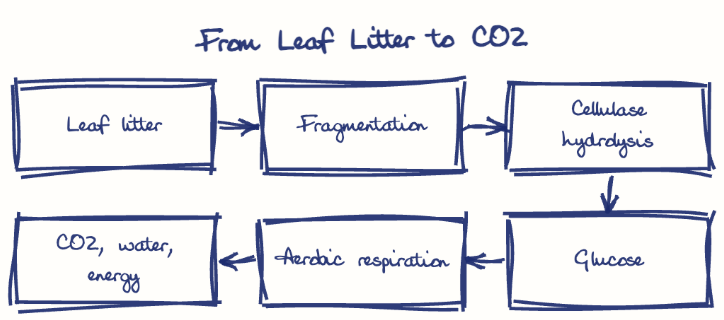
Cellulose is fragmented by detritivores, hydrolysed into glucose by fungal and bacterial cellulases and respired into carbon dioxide and water, with anaerobic digestion, gut symbiosis and fire as other routes. In wetlands and paddy fields, methanogenic archaea release methane alongside carbon dioxide.
Model answer
Ghissu Editorial · Verified 4 Oct 2026 · 275 words
Fragmentation
Rain leaches soluble sugars, and earthworms, termites and millipedes shred litter, enlarging the surface open to microbes.
Enzymatic hydrolysis
Fungi such as Trichoderma and bacteria such as Cellulomonas secrete cellulases that cut the chains into cellobiose and then glucose.
Mineralisation
Microbes respire the glucose through glycolysis and the Krebs cycle, releasing carbon dioxide, water and heat, which is why a compost heap warms up.
Humification
Lignin-shielded remains, slowly attacked by white-rot fungi, become humus that releases carbon over years.
Anaerobic digestion
In wetlands and paddy fields, Clostridium-type bacteria ferment cellulose into acids and hydrogen, which methanogenic archaea convert into methane and carbon dioxide.
Gut symbiosis
Rumen microbes in cattle and Trichonympha in termite guts yield fatty acids, carbon dioxide and methane.
Natural fire
Lightning-set fires oxidise cellulose within minutes into carbon dioxide and water vapour.
Climate control
Decay is fastest in warm, moist tropics and slowest in cold or waterlogged bogs, where plant matter piles up as peat.
This model answer is indicative and the model can make mistakes; please verify key facts independently.
Practise this question
1Get the answer sheet
Sized for this question.
2Write your answer
Timed, by hand.
3Get it marked
Your score and what to fix.
This chapter in the exam
Developments, Applications and Effects in Everyday Life23 questions
Asked in 13 of 14 sittings since 2013
- 2026Distinguish between a Fast Breeder Reactor (FBR) and a thermal nuclear reactor. In the context of first indigenously developed prototype FBR at Kalpakkam, explain the term 'criticality'. What are its implications for clean energy future of our country? (Answer in 150 words)
- 2025How can India achieve energy independence through clean technology by 2047 ? How can biotechnology play a crucial role in this endeavour ?
All 23 questions, sorted by sub-topic, with model answers and practice.
Question from the official UPSC Civil Services (Main) Examination 2022 paper. Answer written by Ghissu's engine and checked against our editorial standards. Found an error? Tell us and we correct it within 48 hours.