2023 · GS Paper 1 · Q13 · 15 marks
How did the colonial rule affect the tribals in India and what was the tribal response to the colonial oppression?
In short
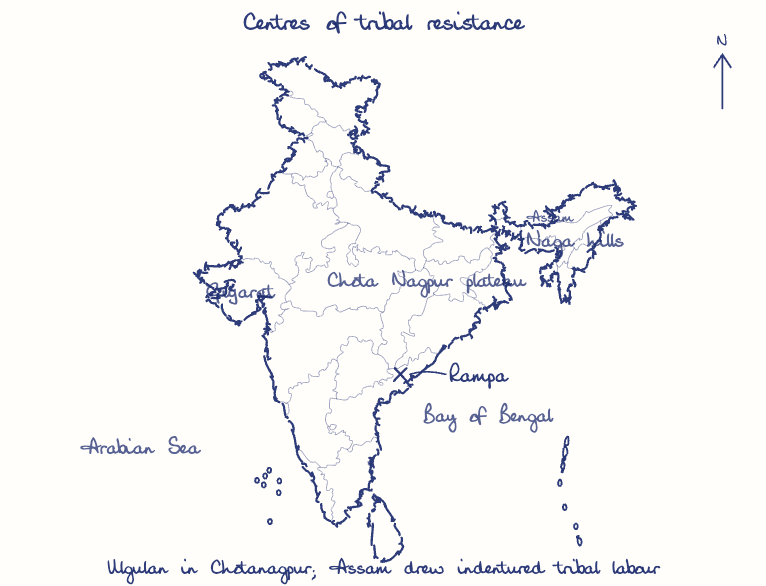
Colonial rule alienated tribal land through new revenue settlements, dikus and the Forest Acts of 1865 and 1878, and tribals answered with revolts, religious reform and links to the national movement. Birsa Munda's Ulgulan (1899-1900) won the Chotanagpur Tenancy Act of 1908.
Model answer
Ghissu Editorial · Verified 4 Oct 2026 · 280 words
Land alienation
The Permanent Settlement (1793) brought zamindars and moneylenders, the dikus, eroding communal tenures such as the Munda khuntkatti.
Forest laws
The Forest Acts of 1865 and 1878 reserved forests and banned shifting cultivation, making forest dwellers trespassers.
Debt and alien law
Cash rent bred debt to moneylenders and begar, while courts, missionaries and the Criminal Tribes Act (1871) displaced headmen and custom.
Armed revolt
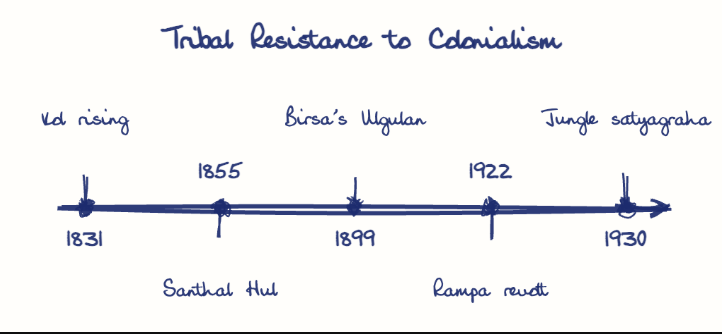
Sidhu and Kanhu's Santhal Hul (1855-56) and Birsa Munda's Ulgulan (1899-1900) attacked dikus and the colonial state together.
Religious reform
Birsa's new faith, the Tana Bhagats and the Devi movement (1922) rejected liquor, rent and moneylenders.
National link
Alluri Sitarama Raju's Rampa revolt (1922-24) and Rani Gaidinliu's resistance joined local grievances to the freedom struggle.
Gains
The Santhal Parganas district (1855) and the Chotanagpur Tenancy Act (1908), which recognised khuntkatti rights, were wrested by resistance.
Rights and self-rule
Implement the Forest Rights Act (2006), which admits a "historical injustice", and PESA (1996) through empowered gram sabhas.
This model answer is indicative and the model can make mistakes; please verify key facts independently.
Practise this question
1Get the answer sheet
Sized for this question.
2Write your answer
Timed, by hand.
3Get it marked
Your score and what to fix.
This chapter in the exam
Popular Movements1 question
Asked in 1 of 14 sittings since 2013
Question from the official UPSC Civil Services (Main) Examination 2023 paper. Answer written by Ghissu's engine and checked against our editorial standards. Found an error? Tell us and we correct it within 48 hours.