2023 · GS Paper 3 · Q15 · 15 marks
The adoption of electric vehicles is rapidly growing worldwide. How do electric vehicles contribute to reducing carbon emissions and what are the key benefits they offer compared to traditional combustion engine vehicles?
In short
Electric vehicles cut carbon by eliminating tailpipe emissions, using energy far more efficiently and getting cleaner as the grid adds renewables, while offering cleaner air, lower running costs and energy security. The ICCT found battery electric cars in India emit 19-34% less over their lifecycle than petrol cars.
Model answer
Ghissu Editorial · Verified 4 Oct 2026 · 304 words
Zero tailpipe emissions
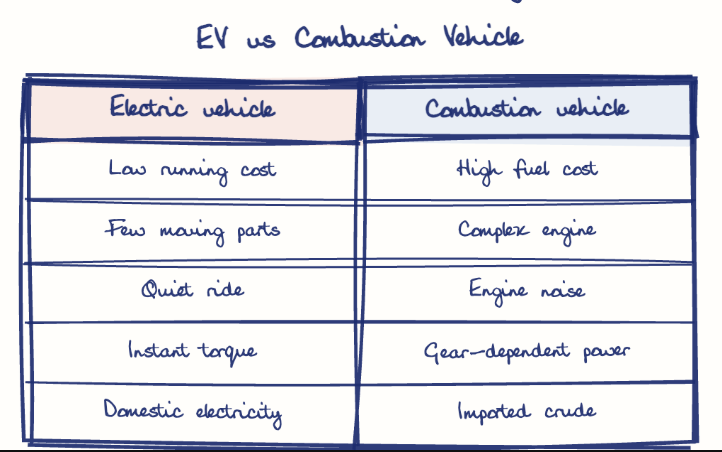
EVs burn no fuel on the road, shifting emissions to power plants that are easier to regulate or replace.
Higher efficiency
An electric drivetrain converts over 77% of grid energy into motion against 12-30% for a petrol car (US Department of Energy), aided by regenerative braking.
Greening grid
With non-fossil sources above 50% of India's installed capacity in 2025, every EV's footprint keeps falling.
Lifecycle gain
The ICCT (2021) found battery electric cars in India emit 19-34% less over their life than petrol cars.
Cleaner air
With no street-level exhaust, EVs cut the vehicular share of pollution in cities like Delhi.
Energy security
India imports nearly 88% of its crude (PPAC, 2024-25), so electric kilometres save foreign exchange.
Lower running costs
Electricity costs far less per kilometre than fuel, and fewer moving parts mean much less servicing.
Clean charging
Pair PM E-DRIVE (2024) chargers with renewable power and time-of-day tariffs.
Circular batteries
Enforce recycling under the Battery Waste Management Rules 2022.
This model answer is indicative and the model can make mistakes; please verify key facts independently.
Practise this question
1Get the answer sheet
Sized for this question.
2Write your answer
Timed, by hand.
3Get it marked
Your score and what to fix.
This chapter in the exam
Developments, Applications and Effects in Everyday Life23 questions
Asked in 13 of 14 sittings since 2013
- 2026Distinguish between a Fast Breeder Reactor (FBR) and a thermal nuclear reactor. In the context of first indigenously developed prototype FBR at Kalpakkam, explain the term 'criticality'. What are its implications for clean energy future of our country? (Answer in 150 words)
- 2025How can India achieve energy independence through clean technology by 2047 ? How can biotechnology play a crucial role in this endeavour ?
All 23 questions, sorted by sub-topic, with model answers and practice.
Question from the official UPSC Civil Services (Main) Examination 2023 paper. Answer written by Ghissu's engine and checked against our editorial standards. Found an error? Tell us and we correct it within 48 hours.