2023 · GS Paper 4 · Q4(b) · 10 marks
Differentiate 'moral intuition' from 'moral reasoning' with suitable examples.
In short
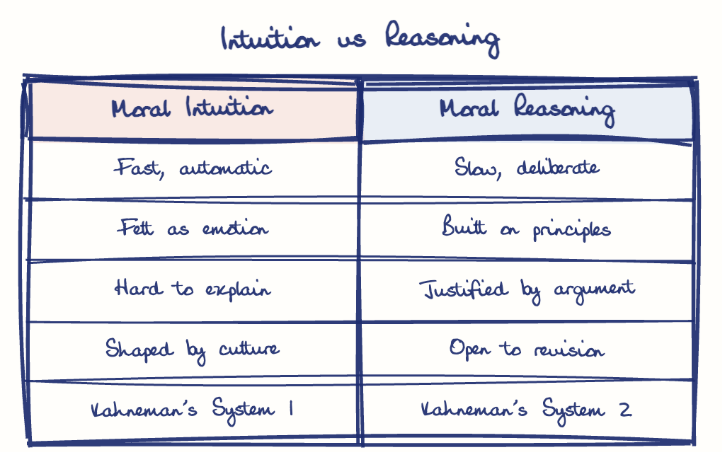
Moral intuition is an instant, emotion-based sense of right and wrong, while moral reasoning is the slow, deliberate application of principles that can be justified and revised. Gandhi withdrawing Non-Cooperation after Chauri Chaura (1922) shows reasoning, and rescuing a stranger from a burning car shows intuition.
Model answer
Ghissu Editorial · Verified 4 Oct 2026 · 293 words
Moral intuition
An instant sense of right and wrong; Jonathan Haidt (2001) calls it the "emotional dog" that a "rational tail" later justifies.
Example of intuition
A passer-by who pulls a stranger from a burning car acts on instant compassion, protected by Section 134A of the Motor Vehicles Act (2019).
Moral reasoning
Conscious application of principles, traced by Kohlberg up to universal ethical principles; Gandhi reasoned his way to withdrawing Non-Cooperation after Chauri Chaura (1922).
Intuition can mislead
Purity-pollution feelings once normalised untouchability, until Ambedkar's reasoned constitutional morality abolished it through Article 17.
Reasoning can turn cold
Bare arithmetic may justify pushing one person to save five, which intuition rightly rejects because dignity cannot be traded for numbers.
Administrative use
An officer's unease about an unusually low tender is a valid alarm, but the decision must rest on reasoned scrutiny under the General Financial Rules and CVC guidelines.
This model answer is indicative and the model can make mistakes; please verify key facts independently.
Practise this question
1Get the answer sheet
Sized for this question.
2Write your answer
Timed, by hand.
3Get it marked
Your score and what to fix.
This chapter in the exam
Dimensions of ethics13 questions
Asked in 8 of 14 sittings since 2013
- 2026Citing the serious adverse effects of long-term medication, a doctor convinces the family of a female patient for surgery. This led the patient to reluctantly consent for the surgery, though her original choice was to opt for medication. Explain the concepts of paternalism and beneficence by analysing the doctor's action.
- 2026Some moral philosophers argue that spending some of your resources—without significantly affecting your financial stability—to help other people who badly suffer is our moral duty and not merely a matter of charity. Justify this claim by explaining the distinction between duty and charity.
All 13 questions, sorted by sub-topic, with model answers and practice.
Question from the official UPSC Civil Services (Main) Examination 2023 paper. Answer written by Ghissu's engine and checked against our editorial standards. Found an error? Tell us and we correct it within 48 hours.