2023 · GS Paper 4 · Q1(b) · 10 marks
'International aid' is an accepted form of helping 'resource-challenged' nations. Comment on 'ethics in contemporary international aid'. Support your answer with suitable examples.
In short
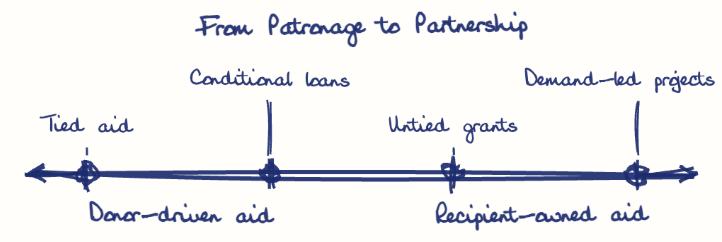
Contemporary international aid is ethical when it is need-based, untied, transparent and owned by the recipient, but it often serves donor leverage through tied loans, conditions and sudden cuts. India's Vaccine Maitri (2021) put need before interest.
Model answer
Ghissu Editorial · Verified 4 Oct 2026 · 277 words
Beneficence
Relief that saves lives regardless of interest is aid at its purest; India's Operation Dost sent rescue teams and field hospitals after the Turkey-Syria earthquake of 2023.
Solidarity
Vaccine Maitri (2021) shipped vaccines to poorer nations while rich ones hoarded doses, a case of Vasudhaiva Kutumbakam.
Partnership
India's support of about 4 billion dollars helped Sri Lanka buy food, fuel and medicine in its 2022 crisis.
Debt and leverage
Sri Lanka's Hambantota port, leased to a Chinese company for 99 years in 2017, raised fears of a debt trap.
Conditionality
IMF structural adjustment in the 1980s and 1990s cut social spending across Africa and Latin America, imposing donor ideology on the poorest.
Dependency
Dambisa Moyo's Dead Aid (2009) argued that aid weakened African institutions and accountability.
Broken promises
The UK's cut to 0.5% of gross national income in 2021 and the dismantling of USAID in 2025 halted health and food programmes midway.
This model answer is indicative and the model can make mistakes; please verify key facts independently.
Practise this question
1Get the answer sheet
Sized for this question.
2Write your answer
Timed, by hand.
3Get it marked
Your score and what to fix.
This chapter in the exam
Ethical issues in international relations and funding9 questions
Asked in 9 of 14 sittings since 2013
- 2026In international relations, ethical considerations are often subjugated to the strategic interests of nation-states. Discuss this from an ethical perspective.
- 2025Carl von Clausewitz once said, "War is a diplomacy by other means." Critically analyse the above statement in the present context of contemporary geo-political conflict.
All 9 questions, sorted by sub-topic, with model answers and practice.
Question from the official UPSC Civil Services (Main) Examination 2023 paper. Answer written by Ghissu's engine and checked against our editorial standards. Found an error? Tell us and we correct it within 48 hours.