2024 · GS Paper 3 · Q15 · 15 marks
The world is facing an acute shortage of clean and safe freshwater. What are the alternative technologies which can solve this crisis? Briefly discuss any three such technologies citing their key merits and demerits.
In short
Desalination, wastewater recycling and atmospheric water generation can augment freshwater, each with merits of new supply and demerits of energy use, brine, public aversion or dependence on humidity. Singapore's NEWater shows recycled water can meet up to 40% of a city's demand.
Model answer
Ghissu Editorial · Verified 4 Oct 2026 · 293 words
Desalination
Reverse osmosis and thermal methods, such as NIOT's Low-Temperature Thermal Desalination plant at Kavaratti (2005), turn seawater into freshwater.
Recycling
Membrane bioreactors and tertiary treatment turn sewage into usable water.
Atmospheric and recharge methods
Atmospheric water generators and fog nets draw water from air, while managed aquifer recharge stores runoff underground.
Seawater desalination
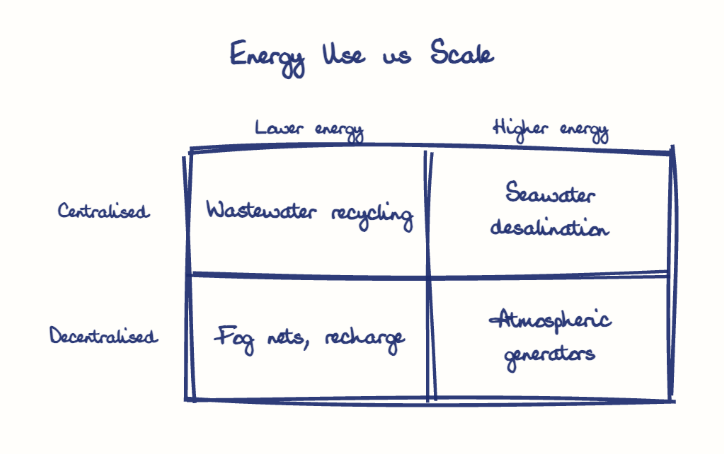
It offers a rain-independent supply, as at Chennai's Minjur and Nemmeli plants, but uses about 3-4 kWh per cubic metre and leaves roughly 1.5 litres of brine per litre of freshwater.
Wastewater recycling
Singapore's NEWater meets up to 40% of demand and Welspun's Anjar unit runs on 30 MLD of recycled sewage, though public aversion, residual contaminants and missing sewers hold it back.
Atmospheric water generators
Modular kiosks, as at Secunderabad station (2019), need no source, but are energy-hungry and fail in dry air.
Reuse and green power
Implement the National Framework on Safe Reuse of Treated Water (2022) and AMRUT 2.0's recycling targets, and run desalination on renewables.
Cut demand first
Pair new supply with micro-irrigation under Per Drop More Crop and volumetric pricing.
This model answer is indicative and the model can make mistakes; please verify key facts independently.
Practise this question
1Get the answer sheet
Sized for this question.
2Write your answer
Timed, by hand.
3Get it marked
Your score and what to fix.
This chapter in the exam
Developments, Applications and Effects in Everyday Life23 questions
Asked in 13 of 14 sittings since 2013
- 2026Distinguish between a Fast Breeder Reactor (FBR) and a thermal nuclear reactor. In the context of first indigenously developed prototype FBR at Kalpakkam, explain the term 'criticality'. What are its implications for clean energy future of our country? (Answer in 150 words)
- 2025How can India achieve energy independence through clean technology by 2047 ? How can biotechnology play a crucial role in this endeavour ?
All 23 questions, sorted by sub-topic, with model answers and practice.
Question from the official UPSC Civil Services (Main) Examination 2024 paper. Answer written by Ghissu's engine and checked against our editorial standards. Found an error? Tell us and we correct it within 48 hours.