2024 · GS Paper 4 · Q1(a) · 10 marks
The application of Artificial Intelligence as a dependable source of input for administrative rational decision-making is a debatable issue. Critically examine the statement from the ethical point of view.
In short
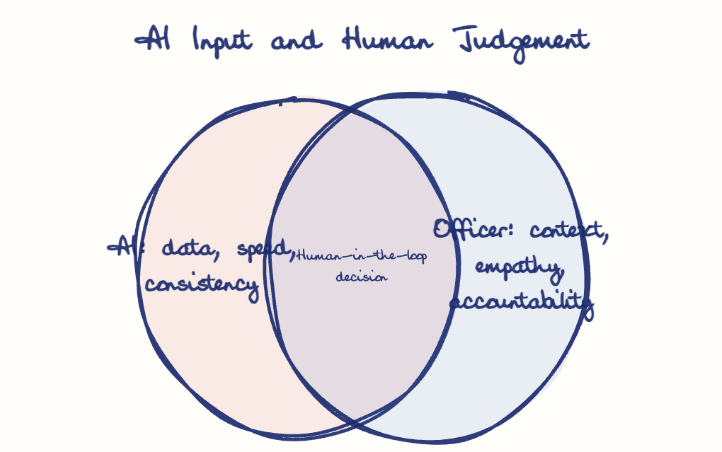
AI can be a dependable input for administration, bringing impartiality, speed and evidence, but not a dependable decider, because it encodes bias, blurs accountability and cannot weigh compassion. The Dutch childcare-benefits algorithm scandal, which brought down the government in 2021, shows the cost of removing human judgement.
Model answer
Ghissu Editorial · Verified 4 Oct 2026 · 263 words
Impartiality
Uniform criteria narrow the discretion that breeds favouritism; Faceless Assessment (2020) allots income-tax cases by algorithm to cut taxpayer-officer contact.
Evidence over hunch
Analysing large datasets lets officers target welfare and inspections on need rather than influence.
Efficiency as duty
Screening thousands of applications or grievances quickly honours the citizen's right to timely decisions.
Encoded bias
Amazon scrapped a hiring tool in 2018 after it downgraded women, and ProPublica (2016) found racial bias in COMPAS risk scores.
Accountability gap
A Dutch fraud-detection algorithm wrongly hounded thousands of childcare-benefit families, and the government resigned in 2021; a black box cannot give the reasoned order natural justice requires.
Moral blindness
AI optimises a measurable target but cannot weigh compassion, dignity or the hard case at the margin.
Privacy
Citizen data in models engages Puttaswamy (2017) and the Digital Personal Data Protection Act 2023.
This model answer is indicative and the model can make mistakes; please verify key facts independently.
Practise this question
1Get the answer sheet
Sized for this question.
2Write your answer
Timed, by hand.
3Get it marked
Your score and what to fix.
This chapter in the exam
Dimensions of ethics13 questions
Asked in 8 of 14 sittings since 2013
- 2026Citing the serious adverse effects of long-term medication, a doctor convinces the family of a female patient for surgery. This led the patient to reluctantly consent for the surgery, though her original choice was to opt for medication. Explain the concepts of paternalism and beneficence by analysing the doctor's action.
- 2026Some moral philosophers argue that spending some of your resources—without significantly affecting your financial stability—to help other people who badly suffer is our moral duty and not merely a matter of charity. Justify this claim by explaining the distinction between duty and charity.
All 13 questions, sorted by sub-topic, with model answers and practice.
Question from the official UPSC Civil Services (Main) Examination 2024 paper. Answer written by Ghissu's engine and checked against our editorial standards. Found an error? Tell us and we correct it within 48 hours.