2026 · GS Paper 1 · Q11 · 15 marks
Vijayanagara architecture exemplifies the amalgamation of past traditions with contemporary practices. Elucidate with examples.
In short
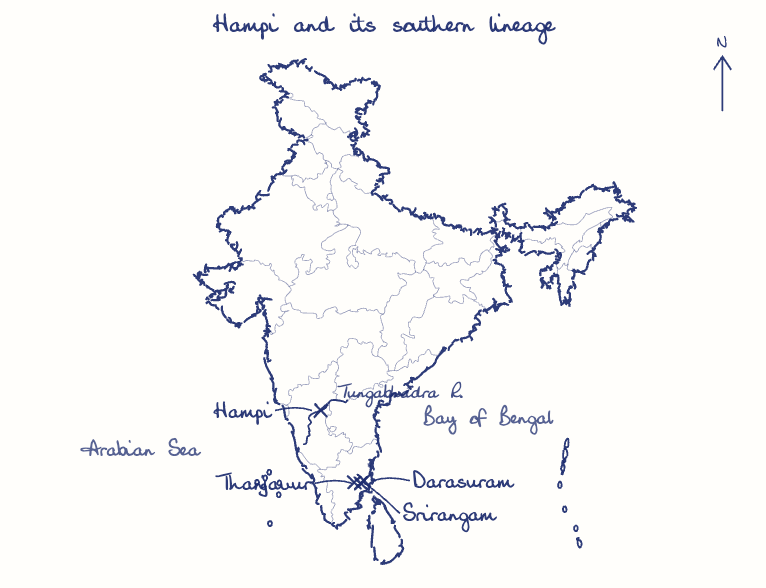
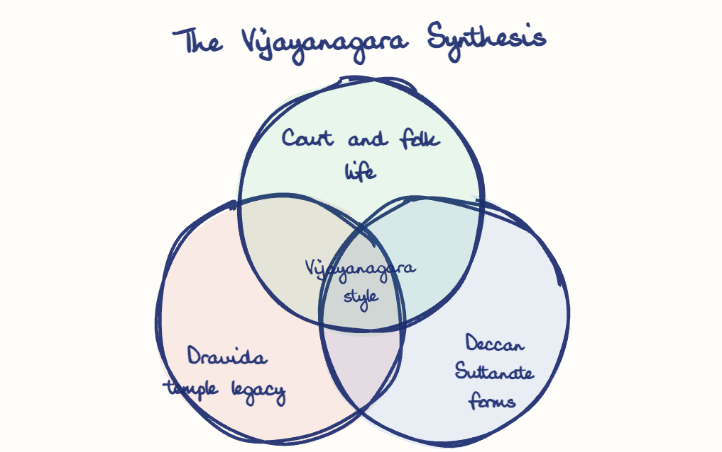
Vijayanagara architecture kept the inherited Dravida temple core of vimana, mandapa, prakara and gopuram while absorbing Deccan Sultanate arches and domes, new rituals and courtly display. Hampi's Virupaksha gopura, Vitthala stone chariot, Lotus Mahal and Mahanavami Dibba show this synthesis.
Model answer
Ghissu Editorial · Verified 4 Oct 2026 · 265 words
Dravida temple core
Virupaksha and Vitthala keep the garbhagriha, vimana, pillared mandapa and prakara of the Chola and Pandya temple-city.
Gopuram enlarged
Late Chola and Pandya gateways grew into massive raya gopurams, like Virupaksha's eastern gopura, that dominate the skyline.
Monolithic carving
The Pallava habit of carving whole rock returns in the Ugra Narasimha monolith (1528), and the stone chariot recalls Chola Darasuram.
Epic reliefs
Ramayana friezes on the Hazara Rama temple continue older narrative panels.
Indo-Islamic forms
The Lotus Mahal pairs Sultanate cusped arches and stucco with a tiered, temple-like roof, and the Elephant Stables and Queen's Bath use domes and vaults.
New temple elements
Amman shrines, kalyana mandapas and rearing-horse pillars reflect new rituals and the horse trade, and Vitthala's musical pillars add sound to stone.
Court life in stone
The Mahanavami Dibba, the Dasara platform described by Domingo Paes, shows hunts, dancers and foreign horse traders.
Protect Hampi
Strengthen its heritage management authority, guard against vandalism like the 2019 toppling of pillars, and expand digital documentation.
This model answer is indicative and the model can make mistakes; please verify key facts independently.
Practise this question
1Get the answer sheet
Sized for this question.
2Write your answer
Timed, by hand.
3Get it marked
Your score and what to fix.
This chapter in the exam
Architecture8 questions
Asked in 8 of 14 sittings since 2013
- 2025Discuss the salient features of the Harappan architecture.
- 2024Though the great Cholas are no more yet their name is still remembered with great pride because of their highest achievements in the domain of art and architecture. Comment.
All 8 questions, sorted by sub-topic, with model answers and practice.
Question from the official UPSC Civil Services (Main) Examination 2026 paper. Answer written by Ghissu's engine and checked against our editorial standards. Found an error? Tell us and we correct it within 48 hours.