2026 · GS Paper 2 · Q7 · 10 marks
Malnutrition in India is not merely a public health concern; it is also a challenge of social equity, human development and effective welfare governance. Discuss.
In short
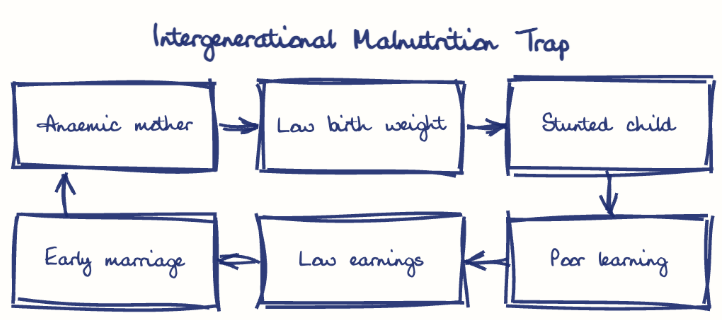
Malnutrition in India reflects social inequality, erodes human capital across generations and exposes fragmented welfare delivery, so it cannot be treated as a health issue alone. NFHS-5 (2019-21) found 35.5% of children under five stunted and 57% of women anaemic.
Model answer
Ghissu Editorial · Verified 4 Oct 2026 · 275 words
Social gradient
NFHS-5 shows stunting nearly twice as common in the poorest wealth quintile as in the richest, and higher among Scheduled Tribe children.
Gendered burden
Anaemia affects 57% of women against about 25% of men, as women eat last and least, making nutrition a question of gender justice.
Lost human capital
Stunting in the first 1,000 days impairs cognition for life; the World Bank's Human Capital Index 2020 scored India at 0.49, so a child reaches only about half her productive potential.
Rights-based entitlements
The PUCL case turned ICDS and mid-day meals into entitlements, and the NFSA 2013 made maternity and child nutrition legal rights.
Fragmented delivery
Nutrition spans four ministries, which is why Mission POSHAN 2.0 (2021) merged schemes.
Last-mile capacity
Overburdened anganwadi workers on low honoraria must turn real-time Poshan Tracker data into local action.
Diet quality
Cereal-heavy supplementary nutrition needs eggs, pulses, millets and fortified rice to tackle hidden hunger.
This model answer is indicative and the model can make mistakes; please verify key facts independently.
Practise this question
1Get the answer sheet
Sized for this question.
2Write your answer
Timed, by hand.
3Get it marked
Your score and what to fix.
This chapter in the exam
Hunger2 questions
Asked in 2 of 14 sittings since 2013
Question from the official UPSC Civil Services (Main) Examination 2026 paper. Answer written by Ghissu's engine and checked against our editorial standards. Found an error? Tell us and we correct it within 48 hours.