Discuss the various information technology applications with special reference to rural India.
In short
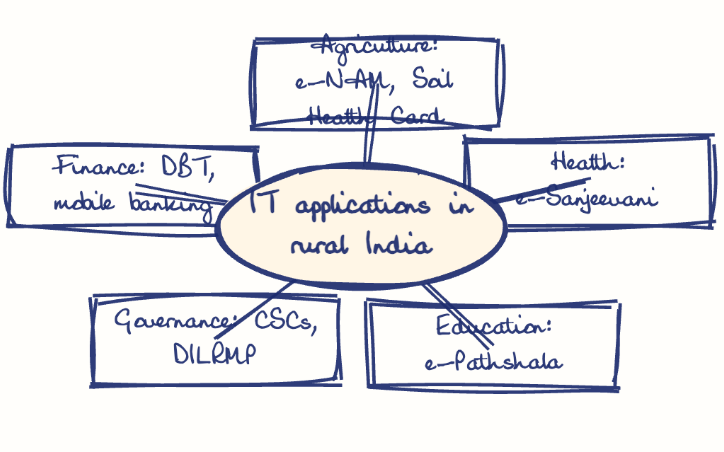
IT applications in rural India include e-NAM, Soil Health Cards and PMFBY for farmers, e-Sanjeevani telemedicine, e-Pathshala learning, e-Panchayat and land record digitisation, Common Services Centres and DBT-based digital payments. They raise farm incomes and service access, but low digital literacy, infrastructure gaps and gender divides limit their reach.
Model answer
Ghissu Editorial · Verified 4 Oct 2026 · 280 words
Agricultural Platforms
e-NAM unifies fragmented markets; Soil Health Card Scheme1 and Pradhan Mantri Fasal Bima Yojana (PMFBY) provide critical data and insurance, aiding farmers’ decisions. These tools help mitigate risks and improve income stability.
Healthcare Digitalization
e-Sanjeevani delivers remote healthcare, addressing rural doctor shortages, while the National Health Resource Repository (NHRR) maps health facilities for planning. Telemedicine enables timely diagnosis and reduces travel for patients.
E-Governance and Service Delivery
Programs such as Digital India Land Records Modernization Program (DILRMP) and Common Services Centres (CSCs) digitize governance, improving transparency and facilitating direct benefit transfers.
Empowering Farmers
Andhra Pradesh’s use of e-NAM and digital soil cards has boosted crop diversification and income by providing real-time market and soil data.
Governance and Inclusion
DILRMP and BharatNet connectivity (2.15 lakh Gram Panchayats2) enhance transparency and participation, including in Andhra Pradesh, enabling efficient service delivery.
Digital Divide
Low digital literacy and gender gaps (only 28% rural women online) limit benefits. Infrastructure deficits and socio-economic barriers further restrict equitable access.
Expand BharatNet Phase-II for full rural connectivity, especially in remote areas of Andhra Pradesh.
This model answer is indicative and the model can make mistakes; please verify key facts independently.
Practise this question
1Get the answer sheet
Sized for this question.
2Write your answer
Timed, by hand.
3Get it marked
Your score and what to fix.
This chapter in the exam
Information and Communication Technology (ICT)24 questions
Asked in 8 of 8 sittings since 2008
Most tested: E-governance and digital public service delivery
- 2025Discuss the evolution of e-governance in India, highlighting key initiatives. Analyze how these initiatives have transformed public service delivery and enhanced citizen engagement.
- 2025Define cybercrime. Discuss the major types of cybercrimes prevalent in India today.
All 24 questions, sorted by sub-topic, with model answers and practice.
Question from the official APPSC Group-I Mains 2008 paper. Answer written by Ghissu's engine and checked against our editorial standards. Found an error? Tell us and we correct it within 48 hours.