Write about the causative agent for diarrhoea, its symptoms, modes of infection and the required preventive measures by the government during the outbreak.
In short
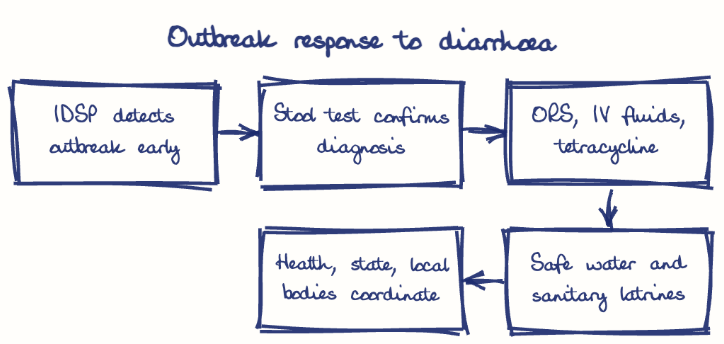
Diarrhoea is caused by bacteria such as Vibrio cholerae, viruses like rotavirus and parasites, spreading through contaminated water and food and causing watery stools, dehydration and cramps. During outbreaks the government relies on IDSP surveillance, oral rehydration and intravenous fluids, safe water and Swachh Bharat Mission sanitation.
Model answer
Ghissu Editorial · Verified 4 Oct 2026 · 264 words
Causative Agents
Vibrio cholerae causes cholera outbreaks; rotavirus, Escherichia coli, and Entamoeba histolytica also contribute significantly. Entamoeba histolytica causes amoebiasis, a common parasitic infection linked to poor water quality.
Surveillance and Treatment
The Integrated Disease Surveillance Programme1 (IDSP) facilitates early detection and notification of outbreaks; treatment involves oral rehydration salts and antibiotics like tetracycline for cholera. Andhra Pradesh strengthens district-level preparedness and confirms diagnoses through bacteriological stool examinations.
Sanitation and Coordination
Swachh Bharat Mission Gramin improves sanitation by providing latrines and safe drinking water; the State Disaster Response Fund (SDRF) aids resource mobilization during outbreaks. Coordination between central and state health bodies, supported by the National Disaster Management Authority, is crucial for effective response.
Environmental Factors and Data Gaps
Monsoon flooding and water stagnation in Andhra Pradesh contaminate water sources, causing seasonal spikes; limited granular data on disease burden hampers targeted interventions.
Way Forward
Expand water and sanitation infrastructure prioritizing vulnerable areas; enhance hygiene awareness through behaviour change campaigns involving local health workers and schools; improve surveillance by upgrading diagnostic facilities and data management for rapid outbreak response.
This model answer is indicative and the model can make mistakes; please verify key facts independently.
Practise this question
1Get the answer sheet
Sized for this question.
2Write your answer
Timed, by hand.
3Get it marked
Your score and what to fix.
This chapter in the exam
Human diseases; genetic engineering basics; biotechnology in agriculture; vaccines54 questions
Asked in 8 of 8 sittings since 2008
Most tested: Vaccines and immunisation, alongside GM crops/biotech agriculture.
- 2025Discuss the transmission dynamics of respiratory tract infections in densely populated urban settings. Propose effective public health strategies for their prevention.
- 2025Examine how urban infrastructure influences the implementation of preventive measures during microbial disease outbreaks. Suggest technology-driven solutions.
All 54 questions, sorted by sub-topic, with model answers and practice.
Question from the official APPSC Group-I Mains 2008 paper. Answer written by Ghissu's engine and checked against our editorial standards. Found an error? Tell us and we correct it within 48 hours.