Write about the different types of modern vaccines available today. How are the modern vaccines better than the conventional vaccines ?
In short
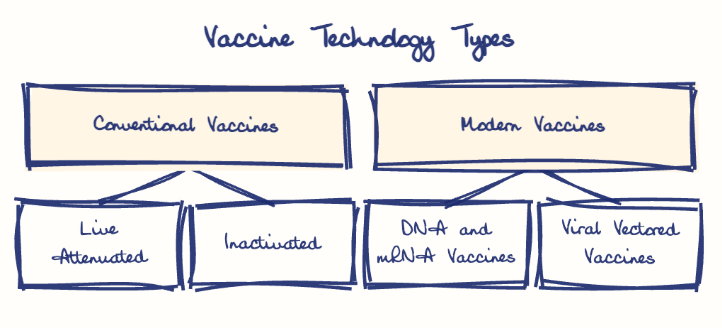
Modern vaccines include DNA, mRNA and viral vectored types that give cells genetic instructions to make pathogen proteins, unlike conventional live attenuated or inactivated whole-pathogen vaccines. They are better because they are developed and modified faster, give targeted immunity with fewer side effects and scale up without culturing live pathogens.
Model answer
Ghissu Editorial · Verified 4 Oct 2026 · 273 words
Diverse Vaccine Platforms
Modern vaccines (DNA, mRNA, viral vectored) use genetic instructions for immunity, allowing faster modification than conventional vaccines based on whole pathogens.
India’s Manufacturing Ecosystem
Manufacturers like Serum Institute and Bharat Biotech, along with Zydus Cadila's indigenous DNA vaccine, give India strong capacity that aids distribution in Andhra Pradesh.
HPV Vaccine Hesitancy2
Gendered mistrust and misinformation cause resistance in rural India, despite government campaigns targeting 11.5 million girls under the Universal Immunisation Programme.
Infrastructure and Distribution
mRNA vaccines’ cold chain needs complicate deployment in resource-poor areas, unlike conventional vaccines such as Covaxin with simpler storage.
Speed and Adaptability
Rapid development and modification enable responses to variants, unlike slower conventional vaccine production.
Targeted Immune Response
Genetic vaccines induce strong cellular and humoral immunity, improving protection and reducing side effects.
Scalability
Platform technologies facilitate mass production without culturing live pathogens, crucial for populous states like Andhra Pradesh.
Boost Indigenous R&D
Increase funding and infrastructure in Andhra Pradesh to foster innovation and reduce import dependence.
Strengthen Surveillance
Enhance vaccine safety and disease monitoring systems to ensure efficacy and public trust.
This model answer is indicative and the model can make mistakes; please verify key facts independently.
Practise this question
1Get the answer sheet
Sized for this question.
2Write your answer
Timed, by hand.
3Get it marked
Your score and what to fix.
This chapter in the exam
Human diseases; genetic engineering basics; biotechnology in agriculture; vaccines54 questions
Asked in 8 of 8 sittings since 2008
Most tested: Vaccines and immunisation, alongside GM crops/biotech agriculture.
- 2025Discuss the transmission dynamics of respiratory tract infections in densely populated urban settings. Propose effective public health strategies for their prevention.
- 2025Examine how urban infrastructure influences the implementation of preventive measures during microbial disease outbreaks. Suggest technology-driven solutions.
All 54 questions, sorted by sub-topic, with model answers and practice.
Question from the official APPSC Group-I Mains 2008 paper. Answer written by Ghissu's engine and checked against our editorial standards. Found an error? Tell us and we correct it within 48 hours.