Write the general characteristics of terrestrial plants. Write about the uses of plants to mankind.
In short
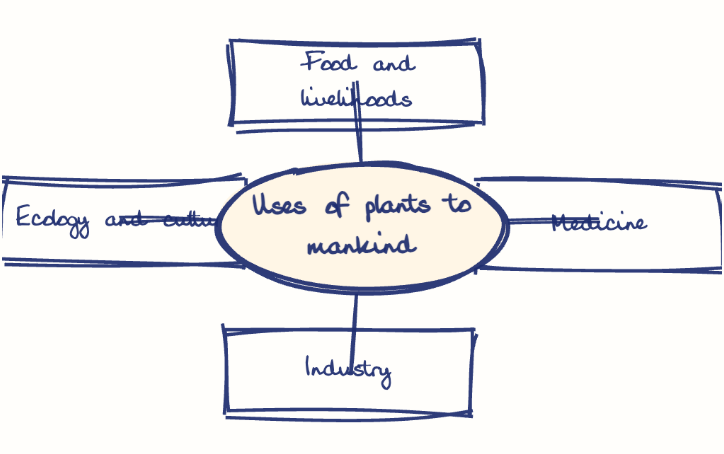
Terrestrial plants have roots, stems and leaves adapted for absorbing water, support and photosynthesis in air, stomata that control water loss, and reproduction by seeds or spores. They give mankind food, medicine (about 7,500 species used therapeutically), fibres like cotton and jute, timber and oils, while protecting soil and biodiversity.
Model answer
Ghissu Editorial · Verified 4 Oct 2026 · 267 words
Land Adaptations and Diversity
Differentiated tissues and vascular systems allow efficient water absorption and photosynthesis; Andhra Pradesh’s mango, tamarind, and spices exemplify plant diversity and economic value. Their cellulose-rich cell walls and chloroplasts optimize energy production in terrestrial environments.
Agriculture and Medicinal Value
Plants supply staple foods and spices like chilli, supporting Andhra Pradesh’s economy; traditional Indian medicine uses 7,500 species, backed by India’s Multi-Scale Conservation of Medicinal1 Plant Biodiversity. The state’s rich medicinal plant biodiversity supports local healthcare and trade.
Industrial and Cultural Importance
Raw materials for textiles, timber, and pharmaceuticals underpin rural industries; plants also maintain soil fertility and cultural traditions. Their ecological role includes preventing erosion and sustaining biodiversity, which is vital for environmental health.
Biodiversity Loss and Genetic Variability
Urbanization threatens diversity in Andhra Pradesh’s Eastern Ghats; chemical variability complicates medicinal standardization. This necessitates robust research and quality control mechanisms to ensure sustainable use.
Sustainable Management
Expanding Medicinal Plants Conservation Areas and agroforestry in Rayalaseema, promoting organic farming, and integrating traditional knowledge are vital. Supporting local communities ensures benefit-sharing and cultural preservation.
This model answer is indicative and the model can make mistakes; please verify key facts independently.
Practise this question
1Get the answer sheet
Sized for this question.
2Write your answer
Timed, by hand.
3Get it marked
Your score and what to fix.
This chapter in the exam
Biotechnology & Nanotechnology: scope, ethics, genetic engineering, biodiversity, fermentation, immuno-diagnosis50 questions
Asked in 8 of 8 sittings since 2008
Most tested: Biodiversity and biotechnology governance/ethics, especially conservation, GMOs, and applied public-health biotech.
- 2025Trace the evolution of India's National Biotechnology Development Strategy (NBDS) and discuss its key objectives. Critically evaluate its impact on the growth of the biotechnology sector in India.
- 2025Analyze the potential of plant-derived biopharmaceuticals in promoting sustainable healthcare. Explain how the application of green pharmacy principles can help minimize environmental harm at each stage of the pharmaceutical lifecycle.
All 50 questions, sorted by sub-topic, with model answers and practice.
Question from the official APPSC Group-I Mains 2008 paper. Answer written by Ghissu's engine and checked against our editorial standards. Found an error? Tell us and we correct it within 48 hours.