Trace the evolution of India's National Biotechnology Development Strategy (NBDS) and discuss its key objectives. Critically evaluate its impact on the growth of the biotechnology sector in India.
In short
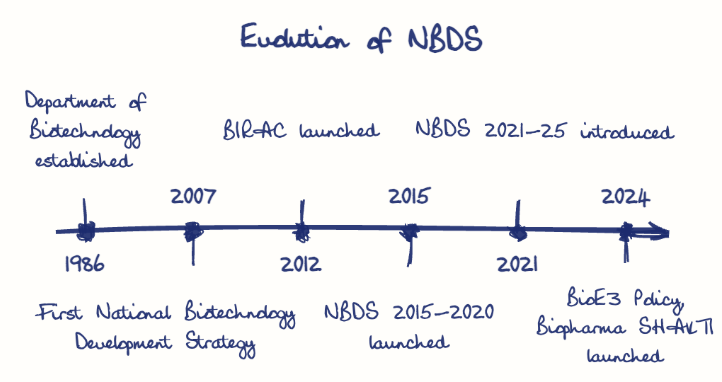
India's biotechnology strategy evolved from DBT (1986) through the first NBDS (2007), BIRAC (2012) and NBDS 2021-25 to the BioE3 Policy, aiming to expand research and bio-manufacturing. The bioeconomy has crossed $165 billion, but R&D spending of about 0.65% of GDP, regulatory delays and talent gaps limit its impact.
Model answer
Ghissu Editorial · Verified 4 Oct 2026 · 336 words
Research and Innovation
NBDS expands research via Bio-RIDE, Emerging Frontiers in Biotechnology, and DBT North Eastern Programme3, supporting 150+ projects in 21 states, including Andhra Pradesh54’s research institutions, strengthening genomics and bio-manufacturing. This has enhanced India’s global competitiveness in biotech sectors like bioinformatics and synthetic biology.
Economic Growth and Jobs
The BioE3 Policy and Biopharma SHAKTI (Rs. 10,000 crore) target a $300 billion bioeconomy by 2030, fostering startups and manufacturing, with India leading in vaccine production. These initiatives have created millions of skilled jobs and boosted exports, reinforcing India’s position as a global biotech hub.
Infrastructure and Funding Gaps
R&D spend is low (~0.65% GDP), slowing the translation of biotech advances into products and public health benefits. Limited BSL-4 labs and clinical trial sites constrain advanced research and commercialization.
State-Centre Collaboration
Strengthen State S&T Councils and BioE3 Cells, including Andhra Pradesh’s research bodies, for regional biotech adoption. This will tailor innovations to local needs and enhance resource utilization.
Regulatory Streamlining and Skill Development
Harmonize laws with clear ethics, boost funding, and expand training to retain talent. Programs like BIRAC should be scaled to support startups and reduce brain drain.
This model answer is indicative and the model can make mistakes; please verify key facts independently.
Practise this question
1Get the answer sheet
Sized for this question.
2Write your answer
Timed, by hand.
3Get it marked
Your score and what to fix.
This chapter in the exam
Biotechnology & Nanotechnology: scope, ethics, genetic engineering, biodiversity, fermentation, immuno-diagnosis50 questions
Asked in 8 of 8 sittings since 2008
Most tested: Biodiversity and biotechnology governance/ethics, especially conservation, GMOs, and applied public-health biotech.
- 2025Analyze the potential of plant-derived biopharmaceuticals in promoting sustainable healthcare. Explain how the application of green pharmacy principles can help minimize environmental harm at each stage of the pharmaceutical lifecycle.
- 2025Explain the regulatory framework governing genetically modified organisms in India and assess its adequacy in addressing modern challenges.
All 50 questions, sorted by sub-topic, with model answers and practice.
Question from the official APPSC Group-I Mains 2025 paper. Answer written by Ghissu's engine and checked against our editorial standards. Found an error? Tell us and we correct it within 48 hours.