Discuss in detail about HIV virus; also mention the symptoms associated with the infection, preventive measures and diagnostic test for disease confirmation.
In short
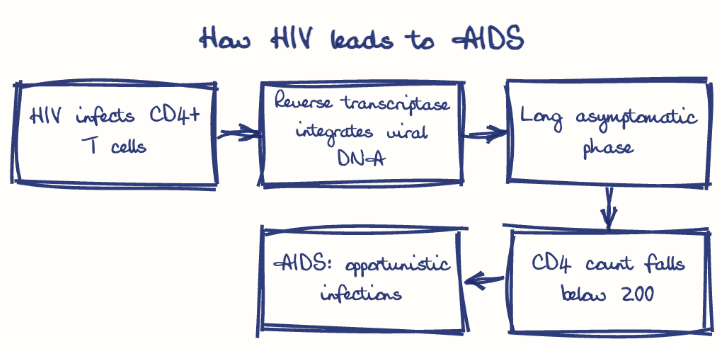
HIV is a retrovirus that destroys CD4 T-helper cells, causing flu-like illness, a long silent phase and finally AIDS with opportunistic infections. It is screened by ELISA, confirmed by Western blot or nucleic acid tests, and prevented through safe sex, safe blood and needles, and free ART.
Model answer
Ghissu Editorial · Verified 4 Oct 2026 · 256 words
HIV/AIDS remains a critical challenge in India, demanding robust institutional frameworks, clinical management, and prevention strategies to meet SDG 3.3 goals of ending the epidemic as a public health threat by 2030.
Institutional Framework and Capacity
1. National AIDS Control Organisation1 (NACO): Established in 1992, NACO leads India’s HIV/AIDS response, coordinating prevention, testing, and treatment, with targeted interventions in Andhra Pradesh to reduce new infections and stigma. 2. Legal Protections: The HIV/AIDS (Prevention and Control) Act, 2017, prohibits discrimination and ensures confidentiality, with state ombudsmen including in Andhra Pradesh to address violations and protect patient rights.
Diagnostic Tests
ELISA screening followed by Western blot or nucleic acid tests confirm diagnosis; CD4 counts below 200 cells/mm³ indicate advanced disease, while viral load testing monitors treatment efficacy, with these services available in Andhra Pradesh healthcare centers.
ART and Community Efforts
Antiretroviral therapy (ART) reduces viral load and transmission risk; free ART and community initiatives like Mission Sampark in Andhra Pradesh enhance treatment access, adherence, and stigma reduction among high-risk groups.
Enhance Awareness and Infrastructure
Expand community education and stigma reduction programs, especially in rural and marginalized areas of Andhra Pradesh, and improve access to rapid and confirmatory HIV testing facilities.
Scale Up ART
Increase ART coverage and adherence support through government programs to achieve viral suppression and improve patient outcomes.
This model answer is indicative and the model can make mistakes; please verify key facts independently.
Sources
Practise this question
1Get the answer sheet
Sized for this question.
2Write your answer
Timed, by hand.
3Get it marked
Your score and what to fix.
This chapter in the exam
Human diseases; genetic engineering basics; biotechnology in agriculture; vaccines54 questions
Asked in 8 of 8 sittings since 2008
Most tested: Vaccines and immunisation, alongside GM crops/biotech agriculture.
- 2025Discuss the transmission dynamics of respiratory tract infections in densely populated urban settings. Propose effective public health strategies for their prevention.
- 2025Examine how urban infrastructure influences the implementation of preventive measures during microbial disease outbreaks. Suggest technology-driven solutions.
All 54 questions, sorted by sub-topic, with model answers and practice.
Question from the official APPSC Group-I Mains 2011 paper. Answer written by Ghissu's engine and checked against our editorial standards. Found an error? Tell us and we correct it within 48 hours.