What are the natural and human induces threats to biodiversity? Give an example of each.
In short
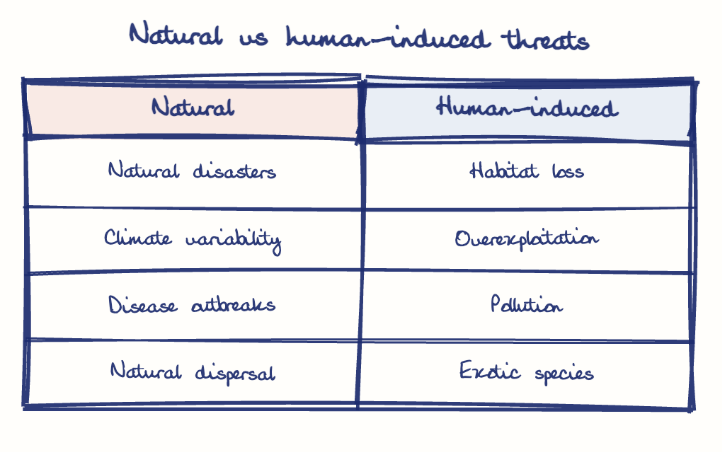
Natural threats to biodiversity include disasters, climate variability, disease outbreaks and natural dispersal of species, such as the Nilgiris wildfires, while human-induced threats include habitat loss, overexploitation, pollution, invasive species and climate change. Habitat loss from rapid coastal development in Andhra Pradesh and Lantana camara invading forests are human-induced examples.
Model answer
Ghissu Editorial · Verified 4 Oct 2026 · 272 words
Natural Disasters
The Nilgiris wildfires1 highlight how seasonal disturbances severely impact forest ecosystems and wildlife in southern India, causing habitat loss and population declines.
Habitat Loss and Fragmentation
Rapid coastal development and aquaculture in Andhra Pradesh fragment habitats, threatening species dependent on continuous ecosystems. Similarly, Karnataka faces human-elephant conflict hotspots due to habitat fragmentation, illustrating broader regional impacts.
Overexploitation and Exotic Species
Illegal wildlife trade targets species for ivory, horns, and traditional medicine, exacerbating population declines. Introduction of invasive species such as Lantana camara and Prosopis juliflora alters native ecosystems and biodiversity balance.
Climate Change and Conservation Efforts
Anthropogenic climate change intensifies natural variability, causing habitat shifts and increased extinction risks. Initiatives like the National Mission on Strategic Knowledge for Climate Change2 and Project Tiger promote adaptive planning and species protection, balancing development and conservation.
Integrated Conservation
Strengthen habitat protection in Andhra Pradesh by safeguarding Key Biodiversity Areas and restoring connectivity; promote sustainable resource use through community-based management; enhance pollution control in sensitive ecosystems like the Godavari basin; and adopt nature-based solutions such as mangrove and wetland restoration to build ecosystem resilience and support climate mitigation.
This model answer is indicative and the model can make mistakes; please verify key facts independently.
Practise this question
1Get the answer sheet
Sized for this question.
2Write your answer
Timed, by hand.
3Get it marked
Your score and what to fix.
This chapter in the exam
Biotechnology & Nanotechnology: scope, ethics, genetic engineering, biodiversity, fermentation, immuno-diagnosis50 questions
Asked in 8 of 8 sittings since 2008
Most tested: Biodiversity and biotechnology governance/ethics, especially conservation, GMOs, and applied public-health biotech.
- 2025Trace the evolution of India's National Biotechnology Development Strategy (NBDS) and discuss its key objectives. Critically evaluate its impact on the growth of the biotechnology sector in India.
- 2025Analyze the potential of plant-derived biopharmaceuticals in promoting sustainable healthcare. Explain how the application of green pharmacy principles can help minimize environmental harm at each stage of the pharmaceutical lifecycle.
All 50 questions, sorted by sub-topic, with model answers and practice.
Question from the official APPSC Group-I Mains 2011 paper. Answer written by Ghissu's engine and checked against our editorial standards. Found an error? Tell us and we correct it within 48 hours.