Describe the Kakatiya Style of architecture and discuss how the Agriculture and Irrigation systems was developed during that period.
In short
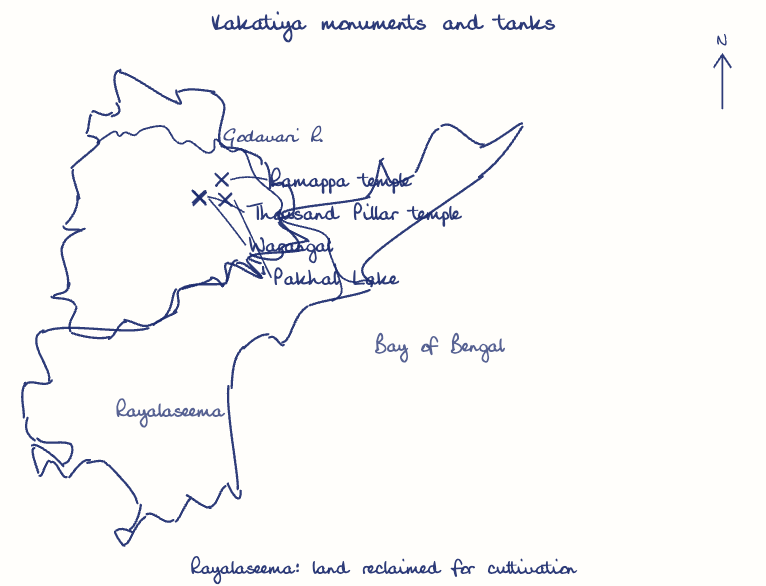
Kakatiya architecture features intricately carved temples like Ramappa with its Madanikas, the Thousand-Pillar Temple and the Warangal Fort gateways (Kakatiya Thoranam). The Kakatiyas reclaimed wasteland and required every village to have a tank, building Ramappa, Pakala and Bayyaram tanks, a legacy revived by Mission Kakatiya in Telangana.
Model answer
Ghissu Editorial · Verified 4 Oct 2026 · 257 words
Temple and Fort Design
Ramappa Temple’s Madanikas and Warangal Fort’s four gateways (Kakatiya Thoranam) exemplify artistic finesse and regional identity, symbolizing both religious devotion and political power.
Construction Techniques and Religious Transition
Use of sandstone, granite, and metal clamps ensured durability, seen in the Thousand-Pillar Temple; architectural styles evolved from Jain influences to predominantly Shaivism, reflecting the dynasty’s religious tolerance and cultural synthesis.
Crop Diversity and Food Security
Promotion of food grains and commercial crops underpinned economic strength, praised by travelers like Marco Polo; this agricultural surplus supported military campaigns and trade expansion.
Tanks and Village Water Management
Large tanks (Ramappa, Pakala) and mandatory village tanks ensured decentralized irrigation across Telangana and Andhra Pradesh, demonstrating advanced hydraulic engineering and community involvement.
Legacy and Modern Projects
Canals and wells supplemented irrigation; Mission Kakatiya restores minor tanks to boost productivity in Telangana, reflecting the dynasty’s long-term vision for water conservation and agrarian prosperity.
Community and Climate Resilience
Strengthening local water governance and promoting climate-resilient agroforestry safeguard agrarian livelihoods against erratic monsoons and environmental challenges.
This model answer is indicative and the model can make mistakes; please verify key facts independently.
Practise this question
1Get the answer sheet
Sized for this question.
2Write your answer
Timed, by hand.
3Get it marked
Your score and what to fix.
This chapter in the exam
Andhra - Medieval16 questions
Asked in 8 of 8 sittings since 2008
Most tested: Telugu language and literature under medieval dynasties, especially Kakatiya, Qutub Shahi, Reddi, and Vijayanagara patronage.
- 2025Discuss the growth of various Saivite sects during the Kakatiya rule.
- 2025Discuss the significance of the Warangal Fort complex as a historical monument.
All 16 questions, sorted by sub-topic, with model answers and practice.
Question from the official APPSC Group-I Mains 2012 paper. Answer written by Ghissu's engine and checked against our editorial standards. Found an error? Tell us and we correct it within 48 hours.