Analyse the aims and objectives of the Scheduled Castes and Scheduled Tribes (Prevention of Atrocities) Act, 1989 Explain whether such objectives have been achieved.
In short
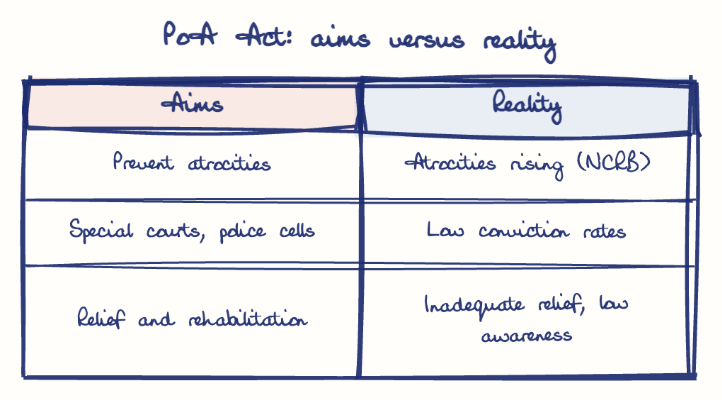
The SC/ST (Prevention of Atrocities) Act, 1989 aims to prevent caste atrocities through specific offences, special courts, bars on anticipatory bail and victim relief, but these aims are only partly achieved. Crimes against SCs and STs keep rising while conviction rates stay low, reflecting weak investigation, prosecution and rehabilitation.
Model answer
Ghissu Editorial · Verified 4 Oct 2026 · 268 words
The Scheduled Castes and Scheduled Tribes (Prevention of Atrocities) Act, 1989 was enacted to combat persistent caste-based violence and ensure justice for SC/ST communities, supplementing constitutional safeguards under Articles 14, 15, 16, 17, and 46.
Aims and Objectives
1. Criminalizing Atrocities: The Act targets violence such as forced consumption of obnoxious substances, wrongful land dispossession, and humiliation to eliminate caste oppression and untouchability practices.
3. Victim Relief and Rehabilitation: The Act provides for victim protection measures, including police arms for self-defence in atrocity-prone areas, aiming to restore dignity and security.
Rising Crime and Low Convictions
NCRB data shows increasing crimes against SC/STs; conviction rates remain low, reflecting investigative, prosecutorial, and judicial weaknesses noted by the National Commission for Scheduled Castes.
Victim Rehabilitation and Awareness Gaps
Relief efforts are insufficient, and awareness among victims and officials is limited, reducing the Act’s deterrent and protective impact.
Boost Awareness and Rehabilitation
Engage communities and improve victim support through comprehensive rehabilitation programs, leveraging the Tribal Sub-Plan and SC sub-plan funds.
Leverage Technology and Data
Implement robust monitoring systems to track atrocity cases4 and inform targeted policy interventions, especially in states like Andhra Pradesh.
This model answer is indicative and the model can make mistakes; please verify key facts independently.
Practise this question
1Get the answer sheet
Sized for this question.
2Write your answer
Timed, by hand.
3Get it marked
Your score and what to fix.
This chapter in the exam
Indian Constitution, Fundamental Rights, DPSP and Union-State functions18 questions
Asked in 8 of 8 sittings since 2008
Most tested: Rights, social justice, and constitutional safeguards for disadvantaged groups.
- 2025The Indian Constitution favours a federal type of government. Considering this, what duties does the Constitution place on State Governments to ensure the smooth functioning of the nation?
- 2025The Constitution of India grants certain rights to citizens and also provides measures to safeguard them. What are the key constitutional arrangements to ensure the protection of these rights?
All 18 questions, sorted by sub-topic, with model answers and practice.
Question from the official APPSC Group-I Mains 2012 paper. Answer written by Ghissu's engine and checked against our editorial standards. Found an error? Tell us and we correct it within 48 hours.