Analyse the recent changes in the composition and structure of agricultural output in Andhra Pradesh.
In short
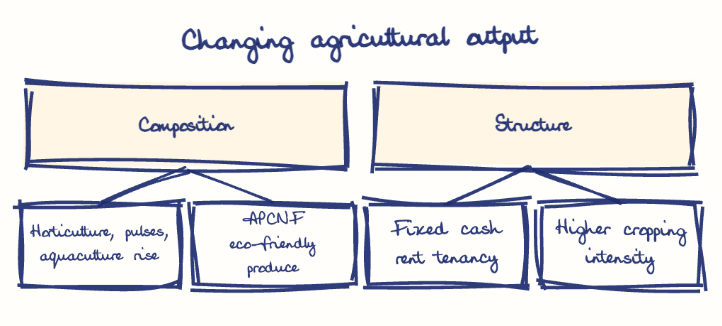
Andhra Pradesh's agricultural output has shifted from cereal dominance towards horticulture, pulses and aquaculture, while its structure now shows land consolidation through leasing, more fixed cash rent tenancy and better irrigation. Lift schemes like Pattiseema and Handri-Neeva raised cropping intensity, and APCNF is steering output towards natural farming.
Model answer
Ghissu Editorial · Verified 4 Oct 2026 · 260 words
Shift to Horticulture and Pulses
Increased cultivation of high-value crops such as chillies, mangoes, and pulses in Krishna and Guntur districts reflects diversification from cereals.
Growth of Aquaculture and Organic Farming
Expansion of aquaculture along the coast and promotion of Andhra Pradesh Community Managed Natural Farming (APCNF) highlight diversification and sustainability.
Land Tenancy and Leasing Patterns
Fixed cash rent tenancy has risen, with medium farmers leasing land, altering risk distribution and cropping patterns.
Irrigation and Market Infrastructure
Lift irrigation schemes like Pattiseema raise cropping intensity, while village Rythu Seva Kendras and e-NAM aim to improve input supply and market linkages, impacting output realization.
Policy and Market Demand
Swarna Andhra Vision 2047 and Crop Cultivators Right Act incentivize diversification; rising demand for high-value crops drives changes.
Climatic Constraints and Sustainability
Water scarcity in Rayalaseema and erratic monsoons push drought-resistant crops and organic methods, improving resilience.
Economic Outcomes
Per capita income of ₹2,68,653 in 2024-25 surpasses national average, but tenancy risks and infrastructure delays challenge smallholders.
Irrigation and Market Reforms
Timely water release and enhanced storage facilities via e-NAM can stabilize incomes.
Scaling Sustainable Practices
Expanding APCNF aligns with climate-resilient agriculture goals.
This model answer is indicative and the model can make mistakes; please verify key facts independently.
Practise this question
1Get the answer sheet
Sized for this question.
2Write your answer
Timed, by hand.
3Get it marked
Your score and what to fix.
This chapter in the exam
Agriculture Development in Andhra Pradesh31 questions
Asked in 8 of 8 sittings since 2008
Most tested: Agriculture’s structure, performance, and state policy interventions in Andhra Pradesh.
- 2025Discuss the role of agriculture in the economic development of Andhra Pradesh. How has agriculture contributed to the State Gross Domestic Product (SGDP) in recent years? Identify the key drivers influencing its performance.
- 2025What are the key drivers for the growth of the fisheries sector? What are the schemes undertaken by the fisheries department for the growth of this sector?
All 31 questions, sorted by sub-topic, with model answers and practice.
Question from the official APPSC Group-I Mains 2012 paper. Answer written by Ghissu's engine and checked against our editorial standards. Found an error? Tell us and we correct it within 48 hours.