Differentiate between virus and bacteria. What are the harmful and useful effects caused by both in the humans and animals?
In short
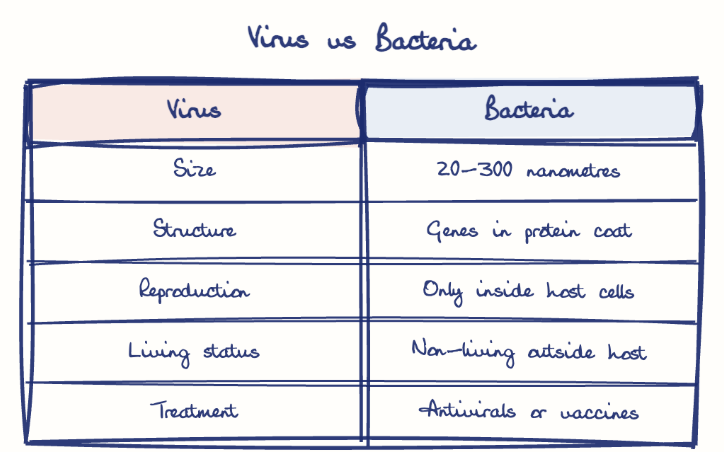
Viruses are tiny non-cellular particles that replicate only inside host cells and resist antibiotics, while bacteria are larger living cells that reproduce independently by binary fission. Both cause harm through diseases like COVID-19, tuberculosis, zoonoses and antimicrobial resistance, but help through the gut microbiome, antibiotics, phage therapy and vaccines.
Model answer
Ghissu Editorial · Verified 4 Oct 2026 · 277 words
Treatment Implications
This difference explains why viral diseases like COVID-191 need vaccines and antivirals, while bacterial diseases like tuberculosis respond to antibiotics, critical in Andhra Pradesh. Understanding these distinctions guides appropriate medical interventions and containment strategies.
Disease and Zoonoses
Viruses such as Nipah (with outbreaks in Kerala) and rabies cause deadly zoonoses; bacteria cause typhoid, anthrax, and leptospirosis affecting public health and livestock. These zoonotic diseases pose ongoing challenges to health systems and animal husbandry.
AMR and Economic Impact
Antimicrobial resistance in bacteria threatens Andhra Pradesh’s animal husbandry; viral mutations complicate vaccine strategies, impacting health systems and agrarian economies. The One Health approach is vital to monitor and control these threats effectively.
Microbiome and Immunity
Bacteria support digestion and immunity in humans and livestock, enhancing productivity in Andhra Pradesh’s dairy and poultry sectors. This symbiosis improves nutrient absorption and disease resistance, benefiting both health and economy.
Biotechnology and Vaccines
India’s BioE3 Policy and Bio-RIDE scheme promote bacterial and viral applications in antibiotics, biofuels, and vaccines, vital for pandemic preparedness and One Health. Bacteriophages are explored as alternatives to antibiotics, addressing antimicrobial resistance challenges.
This model answer is indicative and the model can make mistakes; please verify key facts independently.
Practise this question
1Get the answer sheet
Sized for this question.
2Write your answer
Timed, by hand.
3Get it marked
Your score and what to fix.
This chapter in the exam
Human diseases; genetic engineering basics; biotechnology in agriculture; vaccines54 questions
Asked in 8 of 8 sittings since 2008
Most tested: Vaccines and immunisation, alongside GM crops/biotech agriculture.
- 2025Discuss the transmission dynamics of respiratory tract infections in densely populated urban settings. Propose effective public health strategies for their prevention.
- 2025Examine how urban infrastructure influences the implementation of preventive measures during microbial disease outbreaks. Suggest technology-driven solutions.
All 54 questions, sorted by sub-topic, with model answers and practice.
Question from the official APPSC Group-I Mains 2012 paper. Answer written by Ghissu's engine and checked against our editorial standards. Found an error? Tell us and we correct it within 48 hours.