Give an account of the adverse effects of passive immunization.
In short
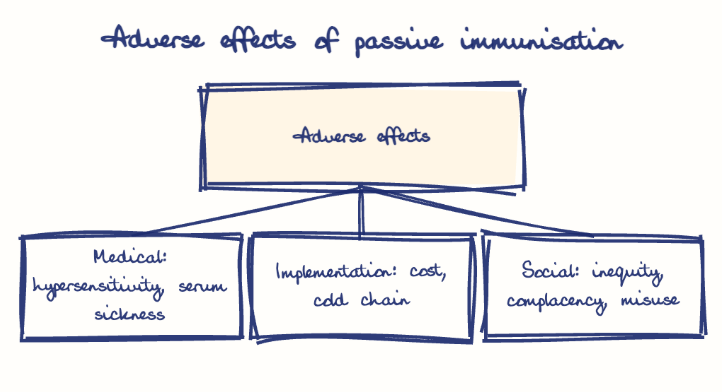
Passive immunization gives only short-lived protection and can cause hypersensitivity reactions up to anaphylaxis, serum sickness, rare blood-borne infection and blunted response to live vaccines like measles. In Andhra Pradesh, equine antivenoms used for snakebite in Visakhapatnam carry allergy risks, while cost and cold chain limits restrict access in Rayalaseema.
Model answer
Ghissu Editorial · Verified 4 Oct 2026 · 273 words
Limited Duration
Protection lasts weeks, necessitating repeated doses or active immunization, burdening Andhra Pradesh’s public health system. This temporary immunity requires careful scheduling to maintain protection.
Serum Sickness and Allergies
Equine antivenoms in Visakhapatnam cause hypersensitivity and serum sickness, complicating care. These immune reactions range from mild rashes to severe anaphylaxis, increasing clinical risks and resource needs.
Cold Chain Issues
Maintaining cold storage in remote Andhra Pradesh districts is difficult, risking antibody potency loss. Inadequate infrastructure leads to reduced efficacy and treatment failures.
Equity Concerns
Unequal distribution raises ethical issues, especially in drought-prone Rayalaseema. Vulnerable populations face barriers to lifesaving passive immunization, highlighting fairness challenges.
Dependency Risks
Overreliance may reduce vaccination uptake, undermining the Universal Immunisation Programme in Andhra Pradesh. This complacency threatens herd immunity and long-term disease control.
Regulatory Strengthening
Enhance quality control and pharmacovigilance in Andhra Pradesh to monitor adverse reactions and ensure safe antibody standards. Robust oversight can improve safety and public trust.
Community Engagement
Promote awareness to counter myths and improve acceptance alongside active immunization. Culturally sensitive education can reduce hesitancy and improve timely treatment.
This model answer is indicative and the model can make mistakes; please verify key facts independently.
Practise this question
1Get the answer sheet
Sized for this question.
2Write your answer
Timed, by hand.
3Get it marked
Your score and what to fix.
This chapter in the exam
Human diseases; genetic engineering basics; biotechnology in agriculture; vaccines54 questions
Asked in 8 of 8 sittings since 2008
Most tested: Vaccines and immunisation, alongside GM crops/biotech agriculture.
- 2025Discuss the transmission dynamics of respiratory tract infections in densely populated urban settings. Propose effective public health strategies for their prevention.
- 2025Examine how urban infrastructure influences the implementation of preventive measures during microbial disease outbreaks. Suggest technology-driven solutions.
All 54 questions, sorted by sub-topic, with model answers and practice.
Question from the official APPSC Group-I Mains 2012 paper. Answer written by Ghissu's engine and checked against our editorial standards. Found an error? Tell us and we correct it within 48 hours.