What is hydrophobia? how is it caused? What remedial or precautionary measures are to be taken?
In short
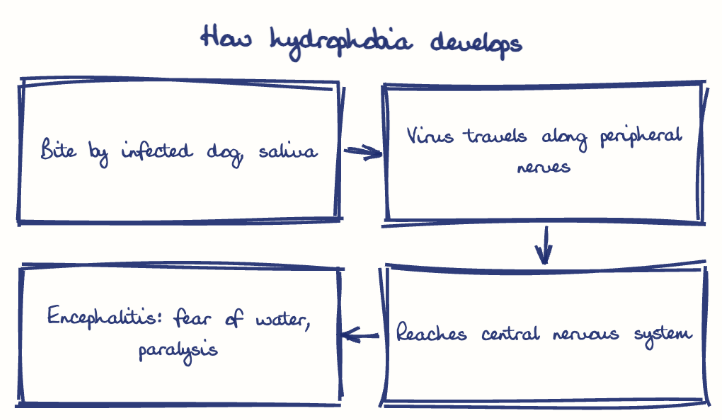
Hydrophobia, or rabies, is a fatal disease caused by the neurotropic rabies virus, transmitted through the saliva of infected animals, mainly dogs, and travelling along nerves to cause encephalitis and fear of water. Prevention relies on immediate wound washing, rabies vaccine and immunoglobulin, and mass dog vaccination.
Model answer
Ghissu Editorial · Verified 4 Oct 2026 · 249 words
National Rabies Control Programme
Provides guidelines for vaccination and post-exposure prophylaxis, implemented by state bodies like Andhra Pradesh’s Directorate of Public Health and Family Welfare.
Surveillance and One Health
Coordination between human and veterinary sectors under One Health ensures effective tracking and control of rabies cases.
Rabies Virus and Pathophysiology
The virus transmits via saliva of infected dogs, traveling through nerves to cause encephalitis and hydrophobia symptoms.
Animal Reservoirs
Stray dogs in Andhra Pradesh, especially in Rayalaseema and coastal districts, are primary reservoirs; other mammals also contribute.
Post-Exposure Prophylaxis (PEP)
Immediate wound washing and timely vaccine plus immunoglobulin administration prevent disease after exposure.
Animal Vaccination Campaigns
Mass dog vaccination and sterilization in urban areas like Visakhapatnam reduce virus reservoirs.
Public Awareness
State campaigns educate on bite management and responsible pet ownership.
One Health Collaboration
Integration of health, veterinary, and municipal services enhances surveillance and outbreak response.
Strengthen Surveillance and Vaccination
Enhance data systems and expand vaccination in urban and rural Andhra Pradesh.
Increase Awareness and Coordination
Use media and community workers to promote prevention; institutionalize One Health coordination.
This model answer is indicative and the model can make mistakes; please verify key facts independently.
Practise this question
1Get the answer sheet
Sized for this question.
2Write your answer
Timed, by hand.
3Get it marked
Your score and what to fix.
This chapter in the exam
Human diseases; genetic engineering basics; biotechnology in agriculture; vaccines54 questions
Asked in 8 of 8 sittings since 2008
Most tested: Vaccines and immunisation, alongside GM crops/biotech agriculture.
- 2025Discuss the transmission dynamics of respiratory tract infections in densely populated urban settings. Propose effective public health strategies for their prevention.
- 2025Examine how urban infrastructure influences the implementation of preventive measures during microbial disease outbreaks. Suggest technology-driven solutions.
All 54 questions, sorted by sub-topic, with model answers and practice.
Question from the official APPSC Group-I Mains 2012 paper. Answer written by Ghissu's engine and checked against our editorial standards. Found an error? Tell us and we correct it within 48 hours.