What is meant by Electrostatic precipitator? Explain its working principle.
In short
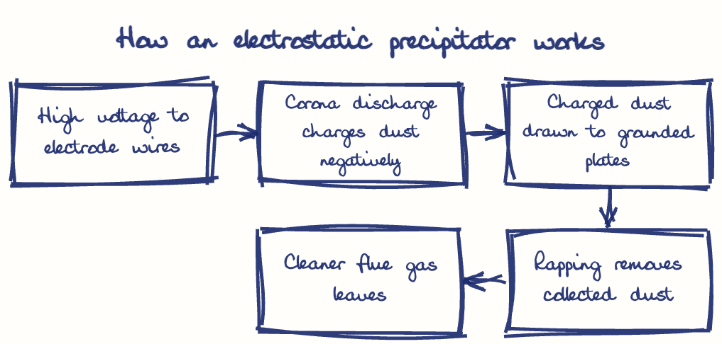
An electrostatic precipitator is a device that removes particulate matter such as fly ash from flue gases in thermal power, cement and steel plants. High voltage on electrode wires creates a corona discharge that charges dust particles, which collect on grounded plates and are rapped off, with over 99% efficiency.
Model answer
Ghissu Editorial · Verified 4 Oct 2026 · 268 words
Regulatory Mandates
The MoEF&CC mandates ESP installation and upgrades in thermal power plants; Visakhapatnam Thermal Power Station actively complies with these norms to reduce emissions and meet national standards.
State Pollution Control
The Andhra Pradesh Pollution Control Board enforces air quality standards and ensures ESP use under the Air (Prevention and Control of Pollution) Act. It also conducts regular inspections and imposes penalties for non-compliance.
Efficiency Factors
High ash resistivity in Andhra Pradesh coal, due to silica and alumina content, reduces ESP performance. Maintaining optimal gas flow velocity and regular cleaning is critical to sustain collection efficiencies above 99%. Operational challenges include fluctuating gas flow and maintenance lapses.
Environmental Benefits
Effective ESP operation in Visakhapatnam’s industrial corridor has significantly cut particulate emissions, supporting ambient air quality goals and protecting vulnerable communities. Integration with scrubbers and bag filters further enhances pollution control.
Future Measures
Strengthening APPCB monitoring, promoting R&D collaboration with Sri Venkateswara University and Andhra University to tailor ESP designs to local coal characteristics, and providing financial aid for ESP upgrades are essential steps to improve performance and compliance.
This model answer is indicative and the model can make mistakes; please verify key facts independently.
Sources
Practise this question
1Get the answer sheet
Sized for this question.
2Write your answer
Timed, by hand.
3Get it marked
Your score and what to fix.
This chapter in the exam
Pollution & solid waste; global issues; environmental legislation; disaster management policy; agricultural revolutions43 questions
Asked in 8 of 8 sittings since 2008
Most tested: Solid waste management and pollution-control legislation
- 2025What are the key principles of Integrated Solid Waste Management (ISWM)? Discuss the role of waste hierarchy in ISWM.
- 2025Define global warming, and differentiate it clearly from climate change. Explain the key natural and human-induced causes of global warming and briefly discuss which factors are currently dominant in driving global temperature rise.
All 43 questions, sorted by sub-topic, with model answers and practice.
Question from the official APPSC Group-I Mains 2012 paper. Answer written by Ghissu's engine and checked against our editorial standards. Found an error? Tell us and we correct it within 48 hours.