What is meant by infection? Explain the terms Acute, chronic, fulminating, localized, generalized, primary and secondary used for infections with examples.
In short
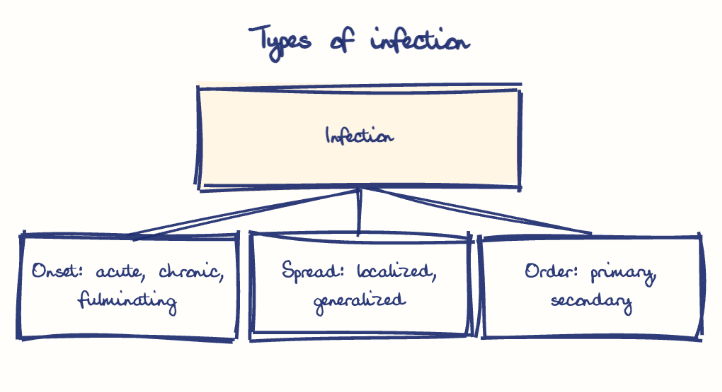
Infection is the invasion and multiplication of pathogens such as bacteria, viruses, fungi or parasites in a host, causing tissue damage and an immune response. Infections may be acute or chronic (tuberculosis), fulminating (meningococcal meningitis), localized (an abscess) or generalized (septicaemia), and primary or secondary (post-viral bacterial pneumonia).
Model answer
Ghissu Editorial · Verified 4 Oct 2026 · 266 words
Acute and Chronic Infections
Acute infections like respiratory illnesses in Visakhapatnam have rapid onset and short duration; chronic infections such as tuberculosis in Andhra Pradesh develop slowly and persist long-term, sometimes lifelong.
Fulminating and Localized Infections
Fulminating infections, e.g., meningococcal meningitis, progress rapidly and are fatal without urgent treatment; localized infections like Staphylococcus aureus skin abscesses remain confined to specific tissues causing redness and pain.
Generalized Infection
Septicemia spreads systemically from untreated localized infections, causing widespread inflammation and organ dysfunction through bloodstream or lymphatic dissemination.
Primary and Secondary Infections
Primary infections like dengue in coastal Andhra Pradesh initiate disease in healthy hosts; secondary infections such as bacterial pneumonia following influenza weaken immunity and worsen outcomes.
Diagnostic and Treatment Challenges
Limited laboratory infrastructure in district hospitals1 of Andhra Pradesh delays accurate diagnosis; rural Rayalaseema faces high fatality from fulminating infections due to delayed healthcare access and emergency services.
Surveillance and Stewardship
Integrated disease monitoring under the National Centre for Disease Control's IDSP and digital platforms like Ayushman Bharat Health Accounts2 (ABHA) enhance real-time infection tracking; antimicrobial stewardship programs in state hospitals and primary health centres are vital to prevent resistance and manage secondary infections effectively.
This model answer is indicative and the model can make mistakes; please verify key facts independently.
Practise this question
1Get the answer sheet
Sized for this question.
2Write your answer
Timed, by hand.
3Get it marked
Your score and what to fix.
This chapter in the exam
Human diseases; genetic engineering basics; biotechnology in agriculture; vaccines54 questions
Asked in 8 of 8 sittings since 2008
Most tested: Vaccines and immunisation, alongside GM crops/biotech agriculture.
- 2025Discuss the transmission dynamics of respiratory tract infections in densely populated urban settings. Propose effective public health strategies for their prevention.
- 2025Examine how urban infrastructure influences the implementation of preventive measures during microbial disease outbreaks. Suggest technology-driven solutions.
All 54 questions, sorted by sub-topic, with model answers and practice.
Question from the official APPSC Group-I Mains 2012 paper. Answer written by Ghissu's engine and checked against our editorial standards. Found an error? Tell us and we correct it within 48 hours.