Write an essay on the modem, wireless, and types of networking systems.
In short
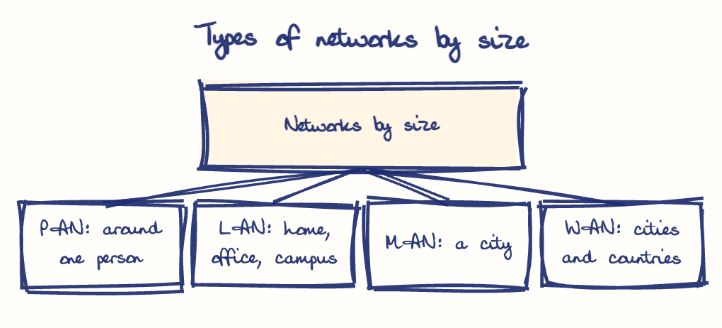
A modem converts digital data into signals for transmission over telephone, cable, fibre or radio and back, while wireless systems such as Wi-Fi, Bluetooth, 4G/5G and satellite carry data without cables. Networks are classed by size as PAN, LAN, MAN and WAN, using bus, star, ring or mesh topologies.
Model answer
Ghissu Editorial · Verified 4 Oct 2026 · 294 words
National Broadband Mission and BharatNet
Launched in 2019, the mission aims for universal broadband; by early 2026, BharatNet connected 2.15 lakh Gram Panchayats3, enhancing rural Andhra Pradesh’s digital infrastructure. This initiative supports government efforts to provide reliable connectivity in remote areas.
Regulation and Market Share4
DoT allocates spectrum on TRAI's recommendations across wireless bands essential for WWAN, WLAN, and WPAN; private telecom operators control over 92% of subscribers, driving network expansion. The regulatory environment ensures efficient spectrum use and fosters competition, improving service quality.
Digital Divide and Operational Barriers
Data costs fell from ₹269 to ₹8-10 per GB by 2025, yet only 28% of rural women use the internet; inconsistent power supply hampers modem deployment in remote areas. Additionally, social barriers and lack of digital literacy limit technology adoption in marginalized communities.
Future Steps
Expanding BharatNet’s fiber rollout, enhancing encryption protocols beyond WEP, and promoting digital literacy among marginalized groups in Andhra Pradesh are crucial for inclusive digital growth. Strengthening public-private partnerships can further accelerate infrastructure development.
This model answer is indicative and the model can make mistakes; please verify key facts independently.
Practise this question
1Get the answer sheet
Sized for this question.
2Write your answer
Timed, by hand.
3Get it marked
Your score and what to fix.
This chapter in the exam
Information and Communication Technology (ICT)24 questions
Asked in 8 of 8 sittings since 2008
Most tested: E-governance and digital public service delivery
- 2025Discuss the evolution of e-governance in India, highlighting key initiatives. Analyze how these initiatives have transformed public service delivery and enhanced citizen engagement.
- 2025Define cybercrime. Discuss the major types of cybercrimes prevalent in India today.
All 24 questions, sorted by sub-topic, with model answers and practice.
Question from the official APPSC Group-I Mains 2012 paper. Answer written by Ghissu's engine and checked against our editorial standards. Found an error? Tell us and we correct it within 48 hours.