Write briefly on the types and uses of biopesticides.
In short
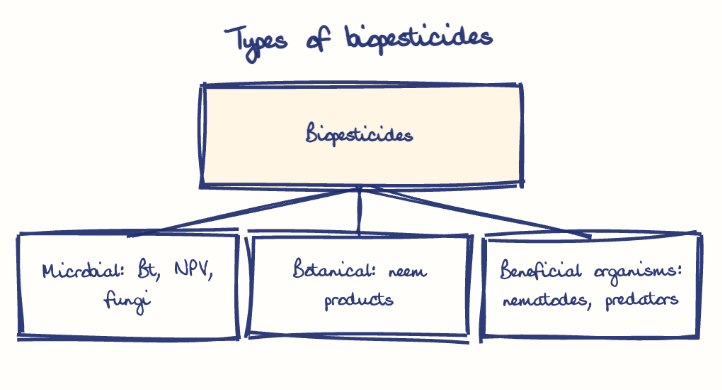
Biopesticides are microbial (Bacillus thuringiensis, nuclear polyhedrosis virus, fungi), botanical (neem-based products) or beneficial organisms such as nematodes and predatory insects. They control pests, plant diseases and weeds in crops and aquaculture within integrated pest management, and Indian sales are growing 10-25% a year.
Model answer
Ghissu Editorial · Verified 4 Oct 2026 · 306 words
Central Regulation
The Central Insecticides Board and Registration Committee oversees biopesticide registration under the Insecticides Act, 1968, ensuring product safety and efficacy. This regulatory framework maintains quality standards and farmer confidence.
Policy Initiatives
The BioE3 Policy (2024) and Biotechnology Research Innovation and Entrepreneurship Development2 (Bio-RIDE) scheme provide funding and institutional support to boost biopesticide R&D and commercialization. Andhra Pradesh’s Department of Agriculture actively promotes biopesticides in horticulture and aquaculture, integrating them into state-level Integrated Pest Management programs.
Microbial and Botanical Biopesticides
Bacillus thuringiensis (Bt) products account for 92% of biopesticide sales; neem-based botanical pesticides are widely used in Andhra Pradesh’s horticulture for pest control. Beneficial organisms like predatory insects also contribute to pest suppression.
Adoption Barriers
Limited shelf life, specificity, and production scale-up hinder widespread use. Compatibility issues with chemical pesticides also pose challenges for integration into farming practices.
Market Trends and Future Steps
Despite challenges, biopesticide sales grow 10-25% annually; increased R&D investment under Bio-RIDE and programs like Emerging Frontiers in Biotechnology (EFB) are needed to develop broader-spectrum, cost-effective products with longer shelf life and better farmer accessibility.
This model answer is indicative and the model can make mistakes; please verify key facts independently.
Practise this question
1Get the answer sheet
Sized for this question.
2Write your answer
Timed, by hand.
3Get it marked
Your score and what to fix.
This chapter in the exam
Human diseases; genetic engineering basics; biotechnology in agriculture; vaccines54 questions
Asked in 8 of 8 sittings since 2008
Most tested: Vaccines and immunisation, alongside GM crops/biotech agriculture.
- 2025Discuss the transmission dynamics of respiratory tract infections in densely populated urban settings. Propose effective public health strategies for their prevention.
- 2025Examine how urban infrastructure influences the implementation of preventive measures during microbial disease outbreaks. Suggest technology-driven solutions.
All 54 questions, sorted by sub-topic, with model answers and practice.
Question from the official APPSC Group-I Mains 2012 paper. Answer written by Ghissu's engine and checked against our editorial standards. Found an error? Tell us and we correct it within 48 hours.