"An Indian peasant is born in debt, lives in debt and dies in debt". In this context, explain the problems faced by the rural population in getting the loans from institutional and non-institutional sources in AP and how they get into debt trap and poverty.
In short
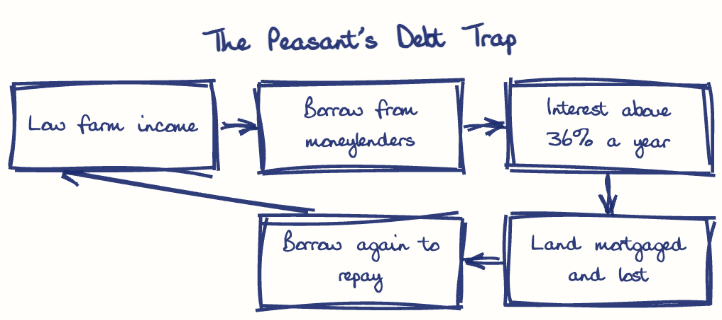
Rural borrowers in Andhra Pradesh are excluded by banks through collateral and documentation demands, sparse branches in Rayalaseema, delays and weak crop insurance, which pushes them to moneylenders charging over 36% a year. Repeated borrowing, land mortgaging and social spending then trap peasants in debt, land loss and poverty.
Model answer
Ghissu Editorial · Verified 4 Oct 2026 · 279 words
Documentation and Collateral Hurdles
Farmers struggle with stringent bank requirements despite schemes like Kisan Credit Cards, limiting formal credit access. Many smallholders lack land titles or formal documents, barring them from institutional loans.
Exorbitant Interest and Land Mortgaging
Moneylenders charge >36% interest, coercing land mortgages and bonded labour, especially among marginalized groups. This predatory lending traps peasants in cycles of debt and land alienation.
Debt Spiral and Land Loss
Repeated borrowing to repay loans leads to land alienation and forced migration in Rayalaseema. Loss of land pushes farmers into wage labour or distress migration, worsening poverty.
Declining Productivity and Social Distress
Debt limits investment in agriculture, causing income decline and farmer suicides. The absence of adequate crop insurance increases vulnerability to crop failures, further deepening distress.
Enhance Rural Finance and Digital Access
Expand banking reach and use digital platforms like e-Seva for loan delivery. Strengthening rural cooperative banks and linking them with NABARD can improve credit flow.
Strengthen Crop Insurance and Literacy
Improve insurance schemes like PM Fasal Bima Yojana tailored to Andhra Pradesh’s agro-climatic conditions and implement financial education programs to reduce credit risk and dependence on moneylenders.
This model answer is indicative and the model can make mistakes; please verify key facts independently.
Practise this question
1Get the answer sheet
Sized for this question.
2Write your answer
Timed, by hand.
3Get it marked
Your score and what to fix.
This chapter in the exam
Agricultural Development (India)16 questions
Asked in 7 of 8 sittings since 2008
Most tested: Agricultural credit and market regulation/price policy.
- 2025Examine the significance of agriculture finance, production, and marketing in the context of India's agricultural development. Discuss the challenges and opportunities associated with financing agricultural activities, improving production, and developing efficient marketing systems to support sustainable growth in the agricultural sector.
- 2025Explain the role of the Agricultural Produce Market Committee (APMC) Act in Agricultural Price Policy in regulating the agricultural market in India. What are the issues that have been observed by policy makers regarding the functioning of the APMC Act?
All 16 questions, sorted by sub-topic, with model answers and practice.
Question from the official APPSC Group-I Mains 2016 paper. Answer written by Ghissu's engine and checked against our editorial standards. Found an error? Tell us and we correct it within 48 hours.